

Difference Between Softwood and Hardwood: Key Features, Uses & Benefits
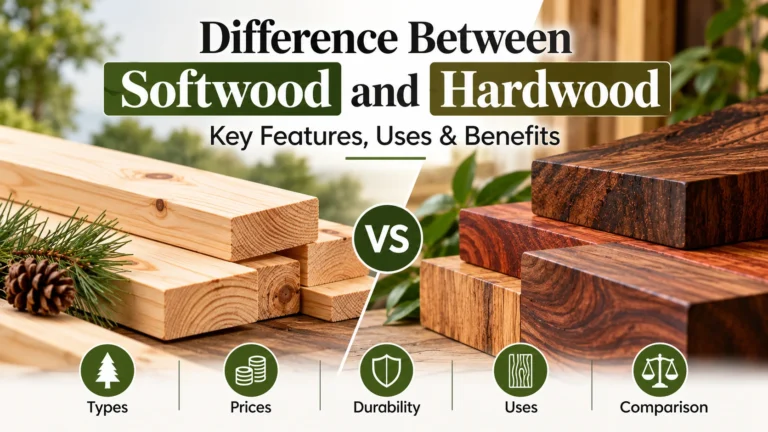
Every piece of timber in your home belongs to one of two broad groups, and the difference between softwood and hardwood decides how it behaves, how long it lasts and what it should be used for. Hardwood comes from broad-leaved flowering trees such as teak, oak and mahogany, and is typically chosen for doors, furniture and flooring. Softwood comes from conifers such as pine, cedar, fir and spruce, and is widely used for construction, framing and budget interiors. The names, however, are about botany, not hardness, and that surprises many buyers. This guide explains both groups, compares them side by side and helps you choose the right one. It is written by the team at TFSWorld, a Bangalore timber and interiors company.
What Is Hardwood?
Hardwood is timber from angiosperms, which are flowering trees with broad leaves. Most hardwoods grow slowly, producing dense wood with a tight grain. In India, teak, sal and Merbau have long been the go-to timbers for doors, frames and beams. That density generally gives hardwoods greater strength, durability and resistance to wear, which is why they are used where timber must last: main doors, window frames, furniture, flooring and carved work.
Teak, oak, mahogany, rosewood, sal and Merbau are all hardwoods. They tend to cost more than softwoods because the trees take longer to mature and the timber is harder to work.
What Is Softwood?
Softwood comes from gymnosperms, mainly conifers that bear cones and needles. These trees usually grow faster and straighter, so the timber is lighter, easier to cut and more affordable. Softwood is widely used for structural framing, roofing, shuttering, packing, shelving and simple furniture.
Pine, cedar, fir and spruce are the best-known softwoods. In India, Himalayan species such as deodar cedar and chir pine are used locally, and much commercial softwood is imported. Because softwoods are usually less resistant to termites and moisture, they are normally pressure-treated or painted before use in homes.
Not always. Hardwood and softwood are botanical groups, not hardness ratings. Balsa is technically a hardwood yet extremely soft, while yew is a softwood that is quite hard.
Difference Between Softwood and Hardwood
The table below summarises the typical differences. Treat them as general patterns, since individual species can break the rules. Hardness is usually compared using the Janka scale, which measures the force needed to press a steel ball into the wood. Teak measures about 1,070 lbf, while eastern white pine, a common softwood, measures roughly 380 lbf, so the typical gap between the two groups is real even though exceptions exist.
| Feature | Hardwood | Softwood |
|---|---|---|
| Tree type | Angiosperms; broad-leaved flowering trees | Gymnosperms; conifers with needles and cones |
| Density | Generally dense and heavy | Generally lighter |
| Durability | Usually higher; many species resist termites and decay | Varies; often needs treatment for moisture and termites |
| Growth rate | Slow; trees take decades to mature | Faster; trees often mature sooner |
| Cost | Generally higher | Generally lower |
| Appearance | Rich colour and varied grain | Lighter tones, simpler grain, more visible knots |
| Common uses | Doors, frames, furniture, flooring, carving | Framing, construction, shuttering, budget furniture |
General comparison; exceptions exist within both groups. See The Wood Database for species-level data.
Types of Hardwood and Softwood
Knowing the common types of hardwood and softwood helps you read quotations and compare options sensibly.
Common Types of Hardwood
- Teak — Golden-brown, oily and highly resistant to moisture and termites. Teak is a hardwood, and its Janka hardness is about 1,070 lbf according to The Wood Database.
- Oak — Strong with a distinctive open grain, used for furniture and flooring.
- Mahogany — Stable, reddish-brown and easy to work, used for doors, panelling and furniture.
- Rosewood — Dark, richly figured and prized for carved doors, panels and premium furniture.
Common Types of Softwood
- Pine — Light, affordable and easy to work, used for furniture, framing and interior joinery.
- Cedar — Aromatic and naturally resistant to rot, often used for cladding, chests and outdoor work.
- Fir — Straight-grained and strong for its weight, common in structural framing.
- Spruce — Pale and light, used for framing, panelling and musical instruments.
| Wood | Group | Key characteristics | Common applications |
|---|---|---|---|
| Teak | Hardwood | Oily, durable, termite resistant, golden-brown | Doors, frames, furniture, flooring |
| Oak | Hardwood | Strong, open grain, light to medium tone | Furniture, flooring, cabinets |
| Mahogany | Hardwood | Stable, reddish-brown, easy to work | Doors, panelling, furniture |
| Rosewood | Hardwood | Dense, dark, figured grain | Carved doors, decorative panels |
| Pine | Softwood | Light, affordable, knotty, needs treatment outdoors | Framing, shelving, budget furniture |
| Cedar | Softwood | Aromatic, naturally rot resistant | Cladding, outdoor work, chests |
| Fir | Softwood | Strong for its weight, straight grain | Structural framing, joinery |
| Spruce | Softwood | Pale, light, even texture | Framing, panelling, instruments |
Characteristics are general and vary by species, grade and origin.
Benefits of Hardwood
Durability and Strength
Dense hardwoods hold hinges, screws and heavy loads well and resist dents and wear. Teak, for example, is dense and oil-rich, so doors and frames stay stable through monsoons and summers.
Natural Appearance
Hardwoods offer warm colour and varied grain that look good when simply polished or oiled, with no need for paint to hide the surface.
Long-Term Value
The upfront cost is higher, but hardwood can last for decades and can be sanded and refinished, which lowers the lifetime cost.
Suitability for Furniture and Doors
Strength, stability and finish quality make hardwood the standard choice for main doors, window frames and quality furniture. Our teak door frames are one example.
Tell us where the wood will be used and we will suggest suitable species. Talk to our timber team.
Benefits of Softwood
Lightweight and Easy to Work With
Softwood is light to carry and quick to cut, nail and shape, which speeds up site work and reduces labour.
Cost-Effectiveness
Faster-growing trees mean lower prices, so softwood suits projects where budget matters more than long service life.
Availability
Standard sizes of softwood are produced in large volumes worldwide, so supply is steady and lead times are short.
Suitability for Construction and Interior Applications
Softwood works well for framing, false ceilings, shelving and painted interior joinery, especially when treated against termites and moisture.
Hardwood vs Softwood: Which Is Better for Your Home?
Neither group is better overall. The right pick depends on the job, so match the wood to the application.
- Best option for doors and windows — Hardwood, particularly teak or Merbau (Honne), for strength, stability and termite resistance.
- Best option for furniture — Hardwood for long life; softwood such as pine for light-use or budget pieces.
- Best option for flooring — Hardwood for durability and refinishing; softwood floors dent more easily.
- Best option for construction and interiors — Softwood for framing and concealed structures, hardwood for visible, high-wear surfaces.
| Application | Recommended wood | Why |
|---|---|---|
| Main doors and windows | Hardwood (teak, Merbau) | Strength, stability and termite resistance |
| Premium furniture | Hardwood (teak, oak, mahogany) | Durability, finish and long life |
| Budget furniture and shelving | Softwood (pine) | Lower cost and easy to work |
| Flooring | Hardwood (teak, Merbau, oak) | Wear resistance; can be refinished |
| Framing and concealed structures | Softwood (fir, spruce, pine) | Light, affordable, easy to fix |
How to Choose the Right Wood for Your Project
A simple checklist makes the decision easier. Work through these points before you place an order:
- Define the use first — A main door, a floor and a shelf each ask for different strengths and finishes.
- Set a lifetime budget — A cheaper wood that needs replacing sooner is not always cheaper, so weigh upfront cost against years of service.
- Check the species name — Ask for the exact species, not just “hardwood” or “softwood”, because performance varies within each group.
- Confirm grade, seasoning and origin in writing — Well-dried, graded timber behaves predictably after installation.
- Plan for treatment — Softwood in particular should be treated against termites and moisture, and exposed hardwood benefits from a suitable finish.
If you are comparing hardwood vs softwood for a specific job and want a second opinion, our team will help you weigh the options, and our best wood for doors and windows guide goes deeper on door timber.
Frequently Asked Questions
Hardwood comes from broad-leaved flowering trees and softwood from conifers. The terms describe the tree type, not the wood’s hardness, though hardwoods are usually denser and costlier.
No. Hardwood is usually stronger, but there are exceptions. Balsa is a very soft hardwood, while some softwoods such as yew are fairly hard. Always check the individual species.
Hardwood is generally more expensive because the trees grow more slowly and the timber is denser and harder to work. Softwood is usually cheaper and more widely available.
Yes. Teak (Tectona grandis) is a flowering tree, so it is classed as a hardwood. It is dense, oily and highly resistant to moisture and termites.
Hardwood such as teak or Merbau is best for doors and quality furniture because of its strength and durability. Softwood such as pine is suitable for budget or light-use furniture.
Explore Quality Hardwood Options with TFSWorld
TFSWorld supplies teak and Merbau (Honne) hardwood for doors, windows, frames and interiors from its Bangalore showroom, with timber cut to your required sizes. Browse our timber cut sizes, door and window frames or wood flooring to see what suits your project.
Want a recommendation for your project?
Contact our team to explore available wood products or get a suggestion on the right wood for your home.
Contact Our TeamRelated Post
 Costliest Wood in India: 10 Most Expensive Woods & Prices
 Solid Wood Flooring in Bangalore: Types, Cost & Installation Guide
 How to Identify Teak Wood: 7 Easy Ways to Check Real Teak
 African Teak Wood Price in Bangalore (2026): Complete Buying Guide
 Top Wood Door Manufacturers in Karnataka: How to Choose (2026)
 Buy Vascal Doors in Bangalore: Complete 2026 Buying Guide
 Best Wood for Doors and Windows in India: 2026 Comparison Guide
 Best Wood for Home Interiors in Bangalore: Complete Guide (2026)
 Wooden Pooja Room Doors in Bangalore: Designs, Price & Buying Guide
 Teak Wood Furniture Manufacturers in Bangalore: Types & Cost (2026)
 Buy Teak Wood Door Frames in Bangalore: Price & Types (2026)
 Window Shutters Bangalore: Prices, Types & Buying Guide (2026) | TFS World
 Burma Teak Wood Price in Bangalore (2026): Latest Rates & Buying Guide | TFS World
Are You Ready To Start
New Project With Us?
TFS is where dreams come to life, as you revel in your dreams, that is the language of the universe! Dreams are not meant to fade, but to be brought to fruition and we at TFS will ally with you to turn the brown beauty of our forests into a masterpiece at your homes!

TFS is where dreams come to life, as you revel in your dreams, that is the language of the universe! Dreams are not meant to fade, but to be brought to fruition and we at TFS will ally with you to turn the brown beauty of our forests into a masterpiece at your homes!
Contact Us
- info@tfsworld.in
- +91 9036068435
- 08029723435
- TFS WORLD Metro Pillar no. 497, Near Jnana bharathi metro station, Off Mysore Road, Bangalore - 560039
Site Links
Door & Window Shutters