

Costliest Wood in India: 10 Most Expensive Wood Types and Their Prices
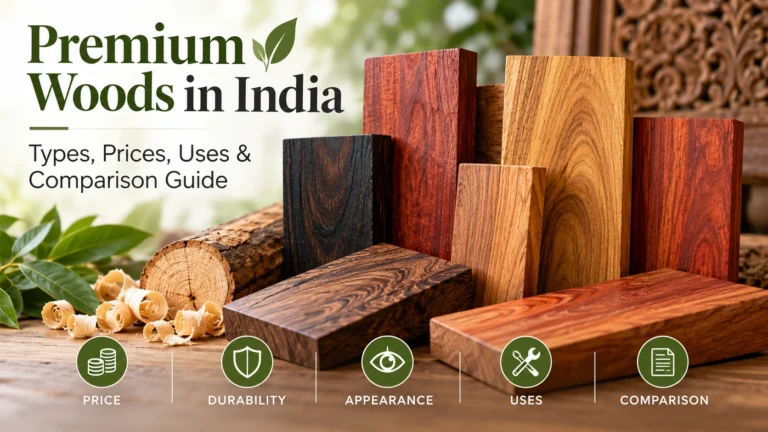
Ask ten timber dealers to name the costliest wood in India and you may hear several answers, because “expensive” depends on whether you mean raw price per tonne, price per cubic foot or the cost of a finished door. At the very top sit red sanders and Indian sandalwood, which are priced as tightly controlled commodities rather than everyday building timber. Below them come the woods that homeowners can actually buy for doors, furniture and flooring, led by Burma teak. Rarity, durability, striking grain and strict legal sourcing all push prices up. This guide ranks ten of the most prized woods, shows the price units that can be verified, and explains how to choose wisely. It is written from the perspective of TFSWorld, a Bangalore supplier of timber, doors and interiors.
What Makes Wood Expensive in India?
- Wood quality and durability — Dense, oil-rich timbers that resist termites and moisture last for decades, so buyers pay a premium for the longer service life.
- Availability and rarity — Slow-growing species with limited natural stands, or timber that has to be imported, command higher prices because supply is thin.
- Grain patterns and appearance — Rich colour, figured grain and a fine finish make some species desirable for decorative work, which lifts demand.
- Demand and sourcing — Strong demand from furniture, carving, instruments and export markets, together with the cost of long-distance sourcing, shapes the final rate.
- Legal sourcing and transportation requirements — Several premium species are protected, so felling, transit and sale need permits. Compliance adds cost, and illegal timber is a legal risk for the buyer.
10 Costliest Wood Types in India
Prices vary widely by grade, size and origin, and some of these woods are not openly traded at all. The ranking below is therefore indicative: the first two are controlled commodities, and the rest are timbers you may meet in the market.
1. Red Sanders (Pterocarpus santalinus)
Native to the Eastern Ghats of Andhra Pradesh, red sanders has a deep red-purple heartwood prized for carving, inlay and traditional instruments. It is listed under CITES Appendix II, so felling, transport and sale are tightly controlled and the timber is not available over the counter. In a government e-auction in 2014, prices ran from about ₹16.5 lakh to ₹1.95 crore per tonne depending on grade.
2. Indian Sandalwood (Santalum album)
Sandalwood is valued for its fragrant heartwood, which is used for carving, oil and incense rather than for furniture. Published research cites heartwood prices from about ₹6,400 per kg in Karnataka purchases to ₹7,900–12,500 per kg in auctions. Karnataka’s 2022 Sandalwood Policy allows private cultivation and open-market sale, but harvesting and transit still follow state rules.
3. Ebony (Diospyros species)
Ebony produces a jet-black, extremely dense heartwood used for inlay, instrument parts and fine accents. Trees are slow-growing and the usable heartwood is small, so supply is limited. It is generally sold by piece or grade, and there is no reliable public rate.
4. Indian Rosewood (Dalbergia latifolia)
Prized for its deep purple-brown colour and figured grain, rosewood is used for carved doors, panels and premium furniture. All Dalbergia species have been listed under CITES Appendix II since 2017, and India bans the export of rosewood logs and sawn timber. Buy only with proper documents; prices are quoted by grade and log.
5. Burma Teak (Tectona grandis)
Burma teak is the most valuable timber you can routinely buy for doors, frames, furniture and flooring in India. It is known for straight grain, golden-brown colour and exceptional stability. Our 2026 rates in Bangalore run from roughly ₹9,500+ per cubic foot depending on log size and grade, before taxes, cutting and transport, which can add 15–20 per cent. See our Burma teak price guide for details.
6. Padauk (Pterocarpus species)
Padauk is easy to recognise by its vivid red-orange colour, which darkens with age. It is imported and used for furniture, turned items and decorative veneers. Prices depend on species, grade and size and are quoted on request.
7. Mahogany (Swietenia species)
Mahogany is a stable, easy-to-work reddish-brown timber popular for doors, panelling and furniture. True mahogany is listed under CITES Appendix II, so the origin and paperwork matter. It is imported and priced by grade and origin.
8. Walnut (Juglans species)
Walnut offers chocolate-brown tones and a handsome grain for furniture, flooring and veneers. Most walnut in Indian interiors is imported, which keeps it in the premium range. Price depends on grade and thickness.
9. Ipe (Handroanthus species)
Ipe is among the densest and hardest commercial timbers, which makes it a leading choice for outdoor decks. Its density also makes it difficult to machine, adding to cost. It is imported and priced by size and grade.
10. Merbau (Honne)
Merbau, known in Karnataka as Honne, is a hard, reddish-brown hardwood with strong decay and termite resistance, used for door and window frames, doors and flooring. It is the most accessible timber on this list and a popular alternative to teak.
| Wood | Price indication and unit | Durability | Appearance | Common applications |
|---|---|---|---|---|
| Red sanders | ₹16.5 lakh–₹1.95 crore per tonne (govt e-auction, 2014, by grade) | Very high | Deep red-purple | Carving, inlay, instruments |
| Indian sandalwood | ≈₹6,400–12,500 per kg heartwood (published research) | High | Pale golden brown, fragrant | Carving, oil, incense |
| Ebony | Quoted by grade and piece; no public rate | Very high | Jet black | Inlay, accents, instruments |
| Indian rosewood | Quoted by grade and log; restricted species | Very high | Deep purple-brown, figured | Carved doors, panels, furniture |
| Burma teak | ₹9,500+ per CFT (our 2026 rates; before taxes, cutting, transport) | Excellent | Golden brown, straight grain | Doors, frames, furniture, flooring |
| Padauk | Quoted by grade and size | High | Red-orange, darkens | Furniture, turnery, veneers |
| Mahogany | Quoted by grade and origin | Good to high | Reddish brown | Doors, panelling, furniture |
| Walnut | Quoted by grade and thickness | Good | Chocolate brown | Furniture, flooring, veneers |
| Ipe | Quoted by size and grade | Exceptional | Brown with olive tones | Outdoor decks, heavy-use flooring |
| Merbau (Honne) | Quoted by size and project | High | Reddish brown | Frames, doors, flooring |
CFT = cubic foot. Prices are indicative and drawn from the cited sources; “quoted” means no reliable public rate exists and the supplier must confirm current pricing. Red sanders and sandalwood figures are historical or research averages, not retail rates.
Most Expensive Wood in India: Which Is the Best for Home Interiors?
The most expensive wood in India is not automatically the best choice for a home. Red sanders and sandalwood cost the most but are controlled, hard to obtain and not meant for doors or floors. Choose by what the wood has to do:
- Doors and windows — Burma teak is the premium standard for its stability and termite resistance, while Merbau (Honne) delivers similar strength at a lower price. See our door and window frames.
- Furniture — Teak, rosewood, mahogany and walnut all work, with teak the best balance of durability and value.
- Flooring — Teak, Merbau and ironwood are proven, durable options for floors; walnut suits statement rooms.
- Decorative interiors — Rosewood, ebony and padauk shine as accents, panels and inlay where small quantities are enough.
A well-chosen mid-priced wood that suits the application will usually outperform an exotic species used in the wrong place.
How to Choose the Right Expensive Wood for Your Home
Consider Your Budget
Decide your ceiling before you shop. Doors and frames use far more timber than accents, so a premium species for the whole house is very different from a premium species for one feature wall.
Check Wood Quality and Grade
Ask for the grade, log size and seasoning. Higher grades with tight grain and fewer defects cost more, but they also perform better.
Match the Wood to Its Intended Use
Choose dense, stable timber for doors and floors and save the delicate decorative woods for panels, inlay and accents.
Consider Maintenance and Durability
Some woods need regular oiling or sealing, while teak and Merbau need little care. Factor long-term upkeep into the real cost.
Verify Authenticity and Legal Sourcing
Ask for origin papers, invoices and permits, especially for rosewood, mahogany, red sanders and sandalwood. The Wood Database keeps a helpful list of restricted and endangered wood species, and unsure buyers should check current rules with the state forest department.
Common Mistakes to Avoid When Buying Expensive Wood
- Choosing based only on price — A high price does not guarantee quality, and a low price for a famous name is often a warning sign.
- Confusing different wood species — Sheesham, rosewood and padauk are often mixed up. Ask for the botanical name.
- Ignoring quality and seasoning — Unseasoned premium timber can still warp or crack after installation.
- Buying without checking the source — Without documents you cannot prove the timber was legally sourced.
- Overlooking legal restrictions on protected species — CITES-listed and state-controlled woods need permits, and unlicensed possession can bring penalties.
Before you invest in the costliest wood in India for your project, get the species, grade, source and price in writing.
Frequently Asked Questions
By price per tonne or kilogram, red sanders and Indian sandalwood are the costliest, but both are tightly regulated. Among woods commonly bought for homes, Burma teak is the most valuable.
Burma teak is the most expensive widely available wood for furniture, followed by rosewood and imported walnut and mahogany. Teak also offers the best balance of durability and value.
Red sanders, sandalwood, ebony, Indian rosewood, Burma teak, padauk, mahogany, walnut, ipe and Merbau are among the most prized, with the first four being the rarest and most regulated.
Teak is dense, oil-rich and naturally resistant to moisture and termites. Burma teak is also scarce, since Myanmar banned log exports in 2014, and good seasoned logs are limited.
Burma teak is the premium choice for doors and frames, with Merbau (Honne) as a strong, more affordable alternative. Rosewood and walnut suit decorative interior elements.
Explore Premium Wood Options with TFSWorld
TFSWorld supplies teak and Merbau (Honne) timber, door and window frames, furniture and flooring from its Bangalore showroom. Our team can help you compare premium woods for your project and share current rates. Explore our door manufacturers range or timber cut sizes.
Looking for premium wood for your home?
Enquire about wood types and current pricing and we will recommend options for your doors, windows and interiors.
Contact Our TeamRelated Post
 Difference Between Softwood and Hardwood: Features & Uses
 Solid Wood Flooring in Bangalore: Types, Cost & Installation Guide
 How to Identify Teak Wood: 7 Easy Ways to Check Real Teak
 African Teak Wood Price in Bangalore (2026): Complete Buying Guide
 Top Wood Door Manufacturers in Karnataka: How to Choose (2026)
 Buy Vascal Doors in Bangalore: Complete 2026 Buying Guide
 Best Wood for Doors and Windows in India: 2026 Comparison Guide
 Best Wood for Home Interiors in Bangalore: Complete Guide (2026)
 Wooden Pooja Room Doors in Bangalore: Designs, Price & Buying Guide
 Teak Wood Furniture Manufacturers in Bangalore: Types & Cost (2026)
 Buy Teak Wood Door Frames in Bangalore: Price & Types (2026)
 Window Shutters Bangalore: Prices, Types & Buying Guide (2026) | TFS World
 Burma Teak Wood Price in Bangalore (2026): Latest Rates & Buying Guide | TFS World