

African Teak Wood Price in Bangalore (2026): Complete Buying Guide

African Teak Wood Price in Bangalore: Complete Buying Guide What is the African teak wood price in Bangalore right now?Quick answer: In 2026, standard African teak (commonly traded as Ghana teak) costs approximately ₹2,000 to ₹3,000 per cubic foot (CFT) in Bangalore, while premium African-origin “Border teak” ranges from ₹3,500 to ₹6,000 per CFT. Prices vary by grade, log size, seasoning and supplier, so always confirm a current quote. African teak wood price in Bangalore has become a common question as more homeowners look for a budget-friendlier alternative to Burma teak without giving up on genuine teak’s natural durability. It’s now a familiar option in furniture, doors and interiors across the city. This guide breaks down current 2026 pricing, what actually affects the cost, and how it stacks up against Indian and Burma teak, so you can buy with confidence rather than guesswork. What Is African Teak Wood? African teak refers to teak grown across West African countries, most commonly traded in India under the name Ghana teak. It shares the same species (Tectona grandis) as Burma and Indian teak but grows faster and in different soil and climate conditions, which gives it a wider grain, lighter brown colour, and somewhat lower natural oil content. It’s commonly used for furniture, doors, window frames and general interior applications, particularly where budget matters more than a multi-generational lifespan. The faster growth cycle, often 15 to 25 years compared to the much slower natural growth of Burma teak, is exactly why African teak costs less: less time in the ground means a lower density and oil content, but also a lower price per tree harvested. This isn’t a quality defect, it’s simply a different growth profile that suits different budgets and applications. African Teak Wood Price in Bangalore Prices vary based on quality grade, thickness, size, seasoning and the supplier you buy from. It’s also worth understanding the difference between raw timber pricing (per CFT) and finished-product pricing (per door, per piece of furniture), since labour, design and hardware are added on top of the raw wood cost. Wood grade/type Unit Approx. price range (2026) Standard African / Ghana teak Per CFT ₹2,000 – ₹3,000 Premium African (“Border”) teak Per CFT ₹3,500 – ₹6,000 Indian teak (for comparison) Per CFT ₹3,500 – ₹7,500 Burma teak (for comparison) Per CFT ₹6,900 – ₹9,500+ Approximate 2026 Bangalore market rates for raw timber; finished doors, frames or furniture cost more once labour, design and hardware are added. Add roughly 15–20% for cutting, transport and taxes. Always confirm current pricing with your supplier. Working out how much timber you need? CFT (cubic feet) is calculated as length × width × thickness, all measured in feet. For example, a door frame section 7 ft long, 0.4 ft (about 5 inches) wide and 0.25 ft (3 inches) thick works out to roughly 0.7 CFT per piece; a standard four-piece frame set is typically around 2.5–3.5 CFT. Multiply this by your African teak rate to estimate raw material cost before cutting and finishing charges. TFS World’s timber team can calculate this precisely for your exact requirement. Factors That Affect African Teak Wood Price Wood Quality and Grade Higher grades with straighter grain and fewer defects cost more per CFT than lower, C-grade stock. Thickness and Size Wider, longer sections yield more usable timber and are priced higher than small cut pieces. Seasoning and Treatment Properly kiln- or air-dried wood costs more but performs far better than green, unseasoned timber. Availability and Supply Import volumes and seasonal demand can shift African teak pricing through the year. Supplier and Customization Cutting to custom sizes, additional finishing, and the supplier’s own margins all factor into the final price. African Teak Wood vs Other Teak Woods African teak sits at the budget end of the teak spectrum, a genuine teak species, but with lower oil content and a coarser grain than Burma or Indian teak. Here’s how the main options compare. Factor African (Ghana) Teak Indian Teak Burma Teak Durability Moderate (15–25 yrs) Good to very good Exceptional (40–60+ yrs) Appearance Wider grain, lighter brown Golden-brown, moderate grain Rich golden, tight even grain Maintenance Moderate Low–moderate Low Price (per CFT) Lowest Mid-range Highest How to Choose Good Quality African Teak Wood Check the Wood Grade Ask specifically whether the timber is standard Ghana-grade or premium Border-grade African teak, the difference in price and quality is significant, and a reputable supplier should be able to explain which you’re being quoted for. Look for Proper Seasoning Insist on kiln- or air-dried timber with low moisture content to avoid post-installation warping. Green or improperly seasoned wood may look identical on the day of purchase but can shrink and crack within months of fitting. Check for Defects Inspect for knots, cracks or uneven colour, which reduce both strength and appearance. Run your hand along the surface to feel for inconsistencies that aren’t always obvious at a glance. Verify Source and Quality Buy from an established timber supplier who can speak knowledgeably about origin and grade, not just quote a price. A supplier who can’t explain where their African teak comes from is a supplier you should be cautious about. Compare Prices Before Buying Get quotes from two or three suppliers to understand the current market range before committing, since African teak pricing can vary noticeably between yards even for similar grades. Where Is African Teak Wood Used? African teak’s combination of genuine teak character and moderate cost makes it versatile across several parts of a home or office fit-out. Doors — A cost-effective option for interior and secondary doors where premium Burma teak isn’t essential, still offering better termite resistance than non-teak alternatives. Windows — Suitable for window frames in drier, less exposed locations, particularly upper floors or covered balconies. Furniture — A popular budget alternative for tables, beds and cabinets, especially for buyers who want the look of teak grain without the Burma teak price tag. Wall panels — Used for feature walls and decorative panelling
Top Wood Door Manufacturers in Karnataka: How to Choose (2026)
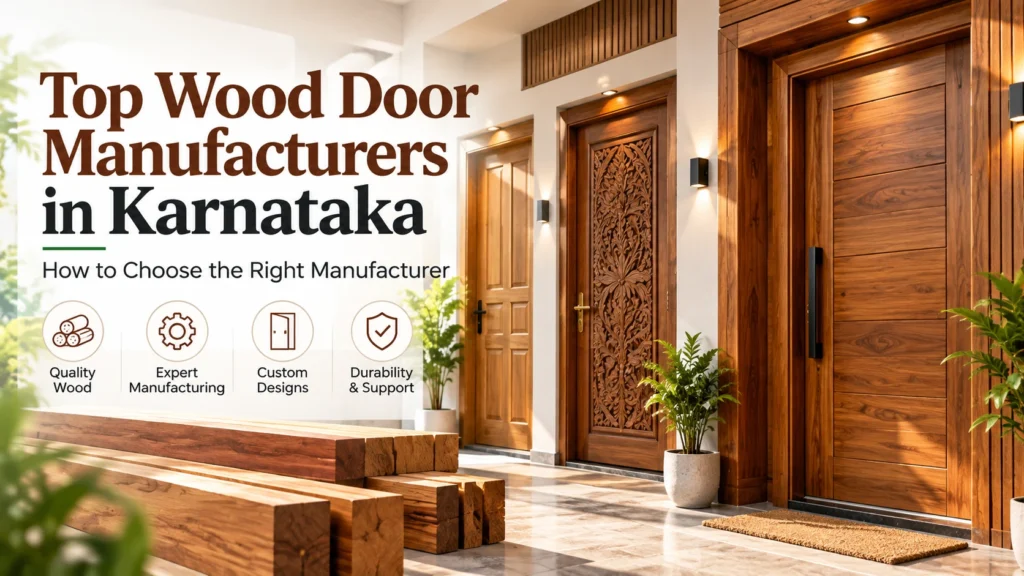
Top Wood Door Manufacturers in Karnataka: How to Choose the Right Manufacturer Karnataka has no shortage of wood door manufacturers, from small local carpentry workshops to established timber companies with decades of history. But the range in quality is enormous, and the wrong choice can mean a door that warps, a design that doesn’t match your home, or a warranty that turns out to be worthless. If you’re comparing wood door manufacturers in Karnataka for your next home or renovation, this guide covers exactly what separates a reliable manufacturer from a risky one. What Should You Look for in a Wood Door Manufacturer? A vascal is the wooden door frame, the vertical side posts and top piece that a door shutter hinges into, fitted directly into a wall opening. It does not include the door shutter itself, which is selected and fitted separately. Vascals come in two types, and knowing which one you need is the single most important decision in this whole guide: Wood Quality A trustworthy manufacturer names the wood species and grade openly, teak, Merbau, sheesham or engineered core, rather than using vague terms like “premium wood.” Manufacturing Experience Years in business usually correlate with better joinery, more refined finishing techniques, and a manufacturer who has already solved the problems a newer workshop hasn’t encountered yet. Door Design and Customization A capable manufacturer should offer both standard designs and custom sizing or carving, rather than forcing you into a limited catalogue. Finishing and Treatment Ask specifically about seasoning (kiln or air-dried) and termite treatment, this affects long-term durability far more than the wood species alone. Installation and After-Sales Support Confirm whether the manufacturer installs the door themselves or only supplies it, and what happens if the door needs adjustment or repair later. Types of Wooden Doors Available in Karnataka Teak Wood Doors The premium standard, valued for natural termite resistance and a lifespan that regularly exceeds 40 years. Teak doors hold their finish well even with minimal maintenance, and Burma teak variants command the highest prices for genuinely lifetime doors. Merbau (Honne) Wood Doors Known locally as Honne, Merbau is one of Karnataka’s most trusted hardwoods after teak, dense, naturally termite- and decay-resistant, and a genuine long-term performer for both doors and frames. It’s usually painted rather than fine-polished, but for buyers who want serious durability at a more accessible price than teak, it’s a strong, popular choice, and one TFS World manufactures regularly. Hardwood Doors Sheesham and similar dense hardwoods offer strong structural performance at a lower cost than teak. These suit buyers who want genuine solid wood durability without paying teak prices, though they typically need more frequent polishing in humid seasons. Panel Doors Flat or grooved panel designs that suit contemporary interiors and cost less than heavily carved doors. Panel doors are usually the fastest to manufacture since they involve simpler joinery than carved or designer options. Designer Wooden Doors Carved, inlaid or textured doors built as statement pieces for main entrances and formal spaces. These take longer to produce, since detailed carving is hand-finished, and pricing reflects the hours of skilled labour involved. Main Entrance Wooden Doors Typically thicker and more heavily reinforced than interior doors, built to handle security, weather exposure and daily use. Many Karnataka homeowners pair a solid main entrance door with a secondary safety door or grille for added security. Door Type Common Material Durability Applications Teak wood doors Solid teak Excellent (40+ yrs) Main doors, premium interiors Merbau (Honne) wood doors Solid Merbau Excellent Main doors, frames, budget-conscious durability Hardwood doors Sheesham Very good Interior doors, budget main doors Panel doors Teak, sheesham, engineered Good to very good Bedrooms, contemporary interiors Designer wooden doors Teak, rosewood Very good Statement main doors, formal entries Main entrance doors Solid teak, Merbau Excellent Security, weather-facing entries How to Choose the Right Wood Door Manufacturer in Karnataka Check Product Quality Inspect joinery, weight and finish on a sample door before ordering, not just photographs. A genuine solid-wood door feels noticeably heavier than an engineered or hollow-core alternative, and its grain should run continuously across the surface rather than repeating in a printed pattern. Review Previous Projects Ask to see completed installations or photos of past work, ideally in person at a workshop. A manufacturer confident in their craftsmanship will happily show you finished doors that have been in use for a few years, which tells you far more than a brand-new showroom sample. Compare Designs and Customization Options A manufacturer with a wider design range and genuine customisation capability gives you more flexibility for non-standard openings, unusual wall thicknesses, or a design that matches an existing home style. Check Pricing and Warranty Get a detailed, itemised quote and a clear warranty period in writing before committing. Vague, bundled pricing without a breakdown of wood cost, labour and finishing is harder to compare fairly between manufacturers. Consider Installation and Service A manufacturer who also installs and services their own doors is usually more accountable than one who only supplies, since they have every incentive to get the fit right the first time. ⚠ Red Flags When Evaluating a Manufacturer They won’t name the wood species or grade, only using vague terms like “premium wood.” No physical workshop or showroom you can visit to inspect actual timber and finished work. Verbal-only warranty, with nothing offered in writing. Pricing that’s dramatically lower than every other quote you’ve received, often a sign of thinner sections or unseasoned wood. Reluctance to show photos or references from completed projects. Checklist Factor What Good Looks Like Wood transparency Species and grade disclosed clearly, in writing Workshop visibility You can visit and inspect raw timber and finished work Customization Sizes, designs and finishes built to your specification Warranty Clear terms covering both wood and workmanship Installation & service In-house fitting and post-installation support available Wood Door Price in Karnataka Wooden door prices in Karnataka depend on the wood type, door size, design complexity, finish, level of customisation, and whether
Buy Vascal Doors in Bangalore: Complete 2026 Buying Guide

Where to Buy Vascal Doors in Bangalore: A Complete Buying Guide If you’ve been asking Bangalore carpenters or timber yards about a “vascal” and gotten slightly different answers each time, you’re not alone. When people search to buy a Vascal door in Bangalore, they’re almost always looking for the wooden door frame, known locally as a chowkat, not the door shutter itself. It’s a term you’ll hear constantly across Bangalore’s timber yards and carpentry workshops, and it comes in two distinct types depending on where it’s going. This guide explains exactly what a vascal is, the difference between the two types, what a frame should cost, and how to buy one without overpaying or ordering the wrong kind. What Are Vascal Doors? A vascal is the wooden door frame, the vertical side posts and top piece that a door shutter hinges into, fitted directly into a wall opening. It does not include the door shutter itself, which is selected and fitted separately. Vascals come in two types, and knowing which one you need is the single most important decision in this whole guide: With threshold (bottom piece) Includes a raised sill at the base of the frame. Generally used for main door frames, balcony doors and other exterior-facing openings, where the threshold blocks water, dust and drafts. Without threshold (bottom piece) No raised sill at the base, just the two side posts and the top piece. Mostly used for interior room doors, bedrooms, bathrooms, kitchens and studies, where a flush floor transition is preferred. Most commonly built in teak or Merbau (Honne) wood, a vascal is measured, cut and fitted to your exact wall opening before the door shutter is chosen. The term is deeply local: you’ll hear “vascal” used the same way across timber yards from Mysore Road to Kumbalgod, always referring to this frame, not the finished door. Why Choose a Wooden Vascal for Your Home? Durability How durable is a well-made vascal frame? Quick answer: A vascal frame built from properly seasoned teak or Merbau (Honne) wood typically lasts 25 to 40 years or more with basic care, since both timbers naturally resist termites and moisture. Modern Appearance A vascal frame doesn’t have to look old-fashioned. Today’s carpenters offer clean, minimal profile mouldings alongside classic rounded or chamfered edges, so a wooden frame fits contemporary apartments just as comfortably as heritage-style homes, whatever door design you eventually choose to hang on it. Easy Maintenance A quality vascal frame needs only occasional dusting and a polish every year or two to keep its finish, far less upkeep than many people expect from solid wood. Weather and Moisture Resistance Are wooden vascal frames suitable for Bangalore’s climate? Quick answer: Yes, when built in teak or Merbau (Honne), both of which handle Bangalore’s humid, moderate climate well without significant warping or swelling across seasons, and a threshold adds further protection against water ingress at exterior-facing openings. Design Options Frame profiles can be kept simple and flush, moulded with a decorative edge, or built wider to accommodate a more substantial main door. Corner joinery can be a clean mitred finish or a traditional mortise-and-tenon join, both customisable to your exact opening. How a Vascal Frame Is Typically Made and Installed Understanding the process helps you ask better questions when you’re comparing quotes. Here’s what a proper vascal installation usually involves, start to finish: Measurement — The carpenter measures your actual wall opening and wall thickness, and confirms whether you need a threshold based on the door’s location. Wood selection and cutting — Timber (teak or Merbau) is selected, checked for seasoning, and cut to the side posts, top piece and, if applicable, the threshold. Joinery and assembly — The frame is joined at the corners, and the threshold is fixed at the base if the design calls for one. Finishing — The frame is sanded and polished or painted as one consistent unit. Site installation — The frame is fitted into the wall opening, packed and plastered around. The door shutter, chosen and built separately, is hinged onto the frame at a later finishing stage. A supplier who skips steps, especially proper measurement and seasoning checks, is usually the one whose frames need adjustment a few months later. Where to Buy Vascal Door in Bangalore? A good vascal supplier should show you the timber before it’s cut, clearly confirm whether you need a with-threshold or without-threshold frame, and offer installation and a warranty. Bangalore has many timber yards along Mysore Road and elsewhere selling vascal frames, but quality and craftsmanship vary widely between them. TFS World builds wooden door frames in-house, matched to your exact opening and threshold requirement. What to check Why it matters Wood species and grade disclosed Confirms you’re getting genuine teak or Merbau, not a substitute With/without threshold confirmed for your opening Prevents ordering the wrong type for a main door vs a room door Installation included or costed separately Prevents surprise charges after delivery Warranty on wood and workmanship Protects you if the frame warps or joinery fails Get a straight quote on your vascal frame Share your door opening size and whether it’s a main door, balcony or room door, and TFS World will quote the right frame with no hidden charges. Talk to our door frame team. How to Choose the Right Vascal Door Choose the Right Size Measure your actual wall opening and wall thickness precisely, this decides the frame’s section size and depth. Decide With or Without Threshold If it’s a main entrance, balcony or any exterior-facing opening, choose a with-threshold frame to block water and drafts. For interior room doors, bedrooms, bathrooms, kitchens and studies, a without-threshold frame gives a flush, trip-free floor transition. Select a Suitable Design Simple flush profiles suit contemporary interiors, while moulded or wider frame sections suit main doors and heritage-style homes. Check Material and Finish Confirm the wood species (teak, Merbau/Honne or engineered core) and whether the finish is matte, satin or high-gloss polish.
Best Wood for Doors and Windows in India: 2026 Comparison Guide
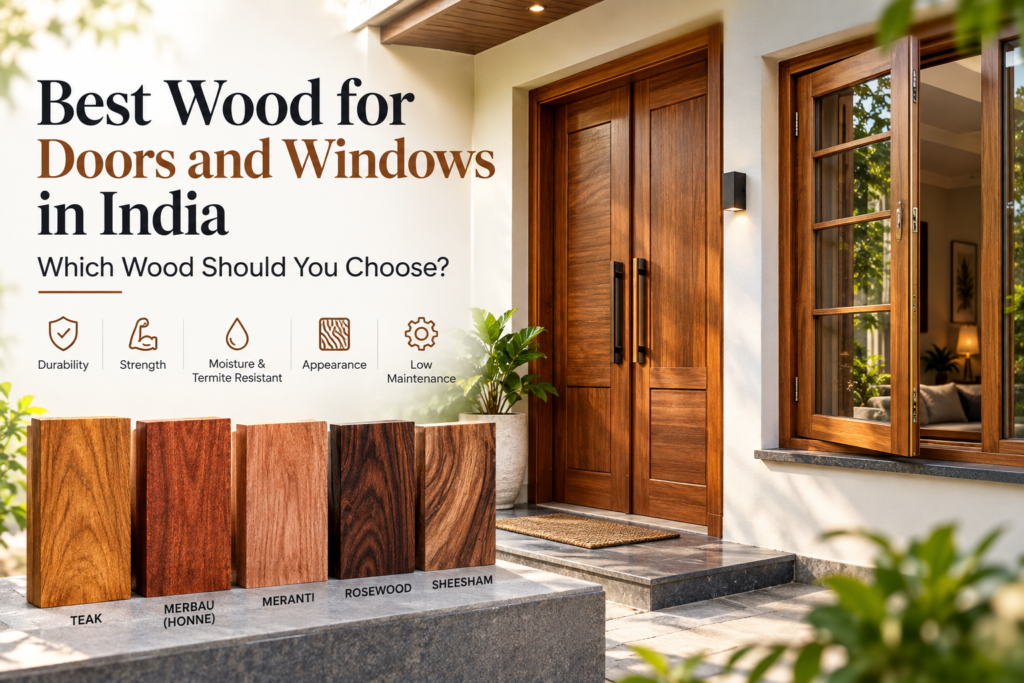
Best Wood for Doors and Windows in India: Which Wood Should You Choose? Picking the best wood for doors and windows in India is not just a style decision, it decides whether your carpentry survives twenty monsoons or starts warping after two. Doors and windows take more daily stress than almost anything else in a home: constant opening and closing, direct sun, driving rain, and, in many parts of India, relentless termite pressure. Get the wood wrong and you’re looking at swelling, cracking or a costly replacement within a few years. This guide compares India’s most trusted door and window timbers, so you can choose with confidence, whether you’re building fresh or replacing an old frame, and the TFS World team has weighed in on what actually holds up in real Indian homes. What Makes a Good Wood for Doors and Windows? Before comparing species, it helps to know what you’re actually testing for. Five properties decide whether a wood performs well as a door or window: Durability How long the wood lasts under daily use, sun and temperature swings before it needs repair. Strength Its ability to hold hinges, hardware and its own weight without sagging or splitting. Resistance to Moisture and Termites Natural oils and density that keep the wood from swelling, rotting or attracting pests. Appearance Grain pattern and colour, which affect how well it suits your home’s overall style. Maintenance Requirements How often it needs polishing, sealing or termite treatment to stay in good shape. Best Types of Wood for Doors and Windows in India Teak Wood Teak remains the benchmark for a reason. Its natural oils and silica content make it highly resistant to termites and moisture, which is why 50-year-old teak doors are still common across Indian homes. It carves well, ages to a rich golden-brown, and needs very little upkeep. The trade-off is cost, genuine teak, especially Burma teak, sits at the premium end. For more on the science behind this, The Wood Database’s teak profile documents its exceptional stability and decay resistance. Merbau (Honne) Wood Merbau, known in Karnataka as Honne, is one of the hardest woods available after teak, dense, naturally decay- and termite-resistant, and prized for door and window frames across the state. It has a rich reddish-brown tone, resists cracking and shrinkage well, and is a genuinely strong, more affordable alternative where teak’s premium price isn’t justified. It’s generally painted rather than polished to a fine sheen the way teak is, but for pure structural performance and longevity, it’s a close second to teak and TFS World’s own preferred alternative. Meranti Wood An imported hardwood (mainly from Southeast Asia), Meranti offers a warm reddish-brown tone and decent strength at a more moderate price than teak. It’s a reasonable mid-range choice for frames and simpler door and window designs, though it needs proper sealing and periodic treatment since its natural termite resistance is lower than teak or sal. Rosewood True Rosewood (Dalbergia latifolia, also called Indian Blackwood or Malabar rosewood) is a deep, dark, richly figured premium hardwood used mostly for statement doors and decorative panels rather than everyday frames. It’s heavier and pricier than Sheesham, its close botanical cousin, and is chosen more for its striking appearance than for budget-friendly volume use. Sheesham Wood Sheesham (Dalbergia sissoo, often called North Indian Rosewood) is one of India’s most widely available hardwoods, with an attractive grain, solid strength and reasonable termite resistance. It’s a strong mid-tier choice for interior doors and window frames, though it benefits from annual treatment in high-humidity coastal cities. Wood Type Durability Termite Resistance Maintenance Best Suited For Teak Excellent (40–60+ yrs) Excellent Low Main doors, exterior windows Merbau (Honne) Excellent Excellent Low Door & window frames, exteriors Sal Very good Good Low–moderate Structural frames (not offered by TFS World) Meranti Moderate Moderate Moderate Budget frames, interior doors Rosewood Very good Good Low–moderate Statement doors, decorative panels Sheesham Good Moderate–good Moderate Interior doors, window frames General comparison based on properly seasoned timber; actual performance varies with grade, treatment and climate exposure. Teak Wood vs Other Woods for Doors and Windows Teak wins on the combination that matters most for exteriors: durability plus low maintenance plus natural termite resistance, no other commonly used Indian door wood matches all three at once. Merbau (Honne) comes closest on raw strength and termite resistance, making it the strongest budget-friendly alternative, though it’s usually painted rather than polished to teak’s fine sheen. Meranti and Sheesham cost less but need more active upkeep in humid climates. Rosewood competes on looks and strength but rarely on price. Comparison factor Teak Merbau (Honne) / Sheesham / Meranti Durability Best-in-class, decades with minimal care Good to very good, varies by species Appearance Warm golden-brown, tight grain Ranges from plain (Meranti) to richly figured (Rosewood/Sheesham) Maintenance Low, occasional polish Low to moderate, periodic treatment often needed Cost Highest Generally more affordable and Sheesham cost less but need more active upkeep in humid climates. Rosewood competes on looks and strength but rarely on price.How to Choose the Best Wood for Your Doors and Windows Consider Your Location and Climate How does climate affect which wood you should choose? Quick answer: Coastal and high-humidity cities favour naturally oily, moisture-resistant woods like teak and Merbau (Honne), while drier inland regions have more flexibility to use meranti or sheesham without extra treatment. Check Termite and Moisture Resistance Ask for the wood’s natural termite resistance rating and whether it has been chemically treated, this matters more for ground-floor doors and window frames exposed to soil moisture. Consider Your Budget Set your tier upfront: teak for a lifetime investment, Merbau (Honne) or meranti for solid mid-range performance, and treated sheesham where budget matters more than a fifty-year lifespan. Match the Wood With Your Interior Style Warm golden tones (teak, sheesham) suit traditional interiors; darker, richly grained rosewood suits a more formal, statement look; paler meranti works well in simpler, contemporary spaces. Consider Maintenance Requirements Be honest about how much upkeep you’ll actually
Best Wood for Home Interiors in Bangalore: Complete Guide (2026)
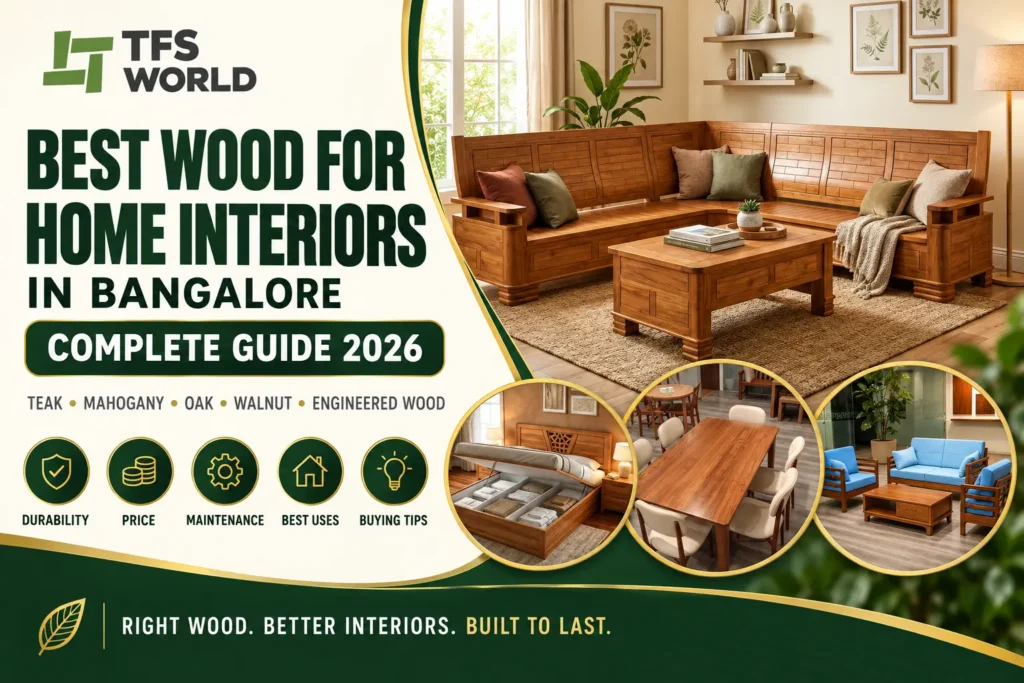
How to Choose the Right Wood for Home Interiors in Bangalore Choosing the best wood for home interiors in Bangalore isn’t just an aesthetic decision, it decides how your doors, furniture and cabinets hold up against the city’s humidity, how much upkeep they demand, and how much of your interiors budget they consume. With so many species and engineered options on the market, it’s easy to either overspend on wood your rooms don’t need, or underspend on wood that won’t last. This guide walks through what actually matters when picking wood for each part of your home, with input from the TFS World workshop. What Should You Consider When Choosing Wood for Home Interiors? How Does Bangalore’s Climate Affect Wood? How does Bangalore’s climate affect wood? Quick answer: Bangalore’s moderate but humid climate can cause poorly seasoned or low-density wood to swell, warp or crack over time, so naturally moisture-resistant species like teak, or properly treated engineered wood, perform best. How Important Is Wood Durability? How important is wood durability? Quick answer: It’s central to long-term value: a durable wood costs more upfront but avoids repeated replacement, while a less durable choice may need refinishing or swapping out within 5 to 10 years. What Wood Quality Should You Look For? What wood quality should you look for? Quick answer: Look for straight, consistent grain, proper seasoning (low moisture content), and, for engineered options, a BWR or marine-grade core rather than basic commercial ply. How Do Budget and Maintenance Affect Your Choice? How do budget and maintenance affect your choice? Quick answer: Premium solid woods cost more but need less frequent replacement, while budget engineered options save money upfront but often need more careful, regular maintenance to last. What Are the Best Types of Wood for Home Interiors in Bangalore? Five options consistently perform well for Bangalore interiors: teak, the benchmark for durability and moisture resistance; mahogany, prized for its warm tone and fine grain; oak, strong and contemporary in appearance; walnut, a darker, premium statement wood; and quality engineered wood (plywood or MDF), the practical choice for budget-conscious carcasses and panels. Types of Wood for Interior Design: Which Is Best for Different Applications? Wood Type Durability Appearance Maintenance Typical Applications Price Level Teak Excellent (40–60 yrs) Golden-brown, tight grain Low Doors, furniture, flooring High Mahogany Very good Reddish-brown, fine grain Low–moderate Furniture, cabinets High Oak Very good Light, pronounced grain Moderate Furniture, flooring, panels High Walnut Good–very good Dark, striking figure Moderate Statement furniture/flooring Premium Engineered Wood (Ply/MDF) Moderate (5–15 yrs) Uniform, veneered Low Wardrobes, kitchen carcasses, panels Budget–Mid A general guide to the best wood for interior design by application; actual lifespan varies with seasoning, grade and maintenance. Which Wood Is Best for Different Areas of Your Home? What Wood Is Best for Doors? What wood is best for doors? Quick answer: Teak wood for interiors is the top choice for doors thanks to its strength, termite resistance and ability to handle daily use without warping. What Wood Is Best for Furniture? What wood is best for furniture? Quick answer: Teak and mahogany suit heirloom, long-term furniture, while good-quality engineered wood works well for budget or shorter-term pieces. What Wood Is Best for Kitchen Cabinets? What wood is best for kitchen cabinets? Quick answer: BWR (boiling water resistant) plywood with a laminate or veneer finish is the practical choice for kitchen cabinets, where moisture exposure is constant. What Wood Is Best for Wardrobes? What wood is best for wardrobes? Quick answer: Quality plywood carcasses with laminate or veneer shutters suit most budgets; solid teak wardrobes are worth it for a premium, long-term bedroom investment. What Wood Is Best for Wall Panels? What wood is best for wall panels? Quick answer: Veneered engineered panels are cost-effective for large feature walls, while solid teak or ash slats add a premium, tactile finish for accent areas. How Much Does Wood for Home Interiors Cost in Bangalore? Cost depends on the wood species, whether it’s solid or engineered, and the finish you choose. As a broad guide: engineered wood sits at the budget end, oak, mahogany and walnut occupy the mid-to-premium range, and solid teak, especially Burma teak, sits at the top. For verified, current per-unit pricing on specific items, see our detailed guides on How Can You Choose the Best Wood for Your Home Interiors? teak wood price in Bangalore and teak wood furniture pricing, since costs shift with grade and market conditions and are best confirmed with a live quote rather than a blog estimate. Check the wood quality — Inspect grain, weight and seasoning before committing to any species. Compare durability and maintenance — Match the wood’s upkeep needs to how much time you realistically want to spend on care. Consider your interior style — Warm golden tones suit traditional interiors; paler, straighter grains suit contemporary spaces. Set your budget — Decide upfront what proportion of your interiors budget wood should take, then choose species accordingly. Choose a reliable supplier — A transparent supplier who shows you the raw timber is worth more than the lowest quote. Where Can You Buy Quality Wood for Home Interiors in Bangalore? Look for a supplier who can show you raw timber, explain grade differences honestly, and back their wood with a warranty. TFS World supplies wood and builds complete interior solutions for Bangalore homes, from doors and furniture to wooden flooring, all sourced and finished under one roof. Not Sure Which Wood Suits Your Home? Tell us about your rooms and budget, and TFS World will recommend the right wood for each space — no upselling, just honest guidance. Talk to TFS World About Your Interiors Frequently Asked Questions About Wood for Home Interiors Which is the best wood for home interiors in Bangalore? Teak is generally considered the best overall choice thanks to its durability and moisture resistance, though mahogany, oak and quality engineered wood all suit specific budgets and applications well. Which wood is best for interior furniture? Teak and
Wooden Pooja Room Doors in Bangalore: Designs, Price & Buying Guide
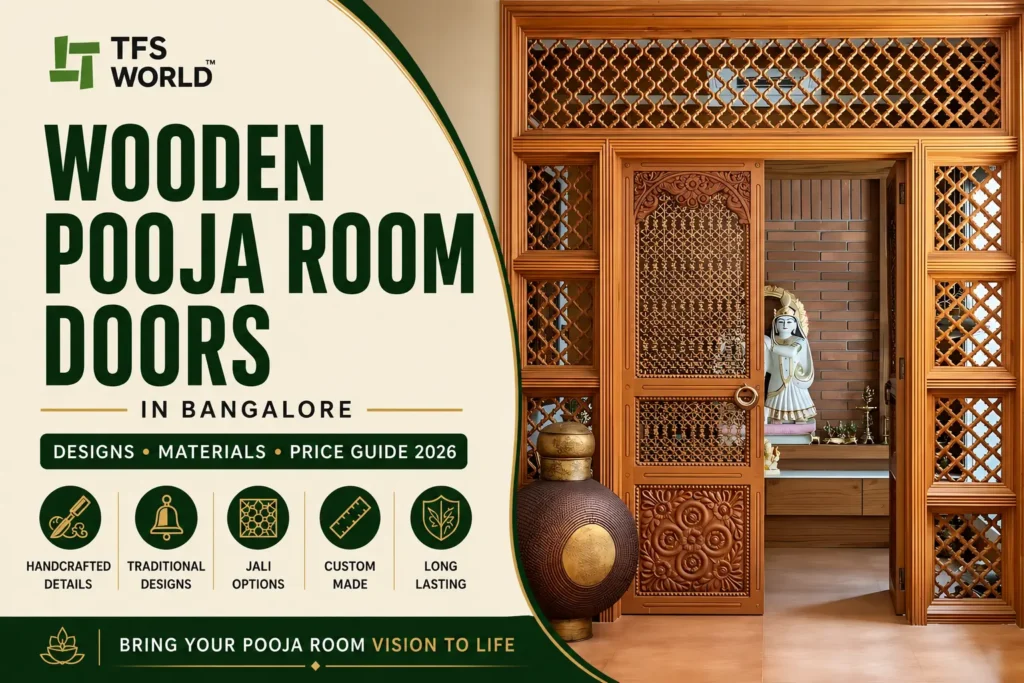
Pooja Room Doors in Bangalore: Designs, Materials & Buying Tips Of all the doors in a home, the one guarding the pooja room carries the most meaning. It frames the quietest, most personal corner of the house, so it’s no surprise that wooden pooja room doors in Bangalore are chosen with far more care than any other door in the home. Between design, wood, size and finish, the choices can feel overwhelming. This guide walks through the popular designs, materials and 2026 price ranges for Bangalore homes, with practical buying tips from the TFS World workshop along the way. Why Choose Wooden Pooja Room Doors for Your Home? What Makes Wood Suitable for Pooja Room Doors? What makes wood suitable for pooja room doors? Quick answer: Wood takes fine carving beautifully, ages gracefully with a warm natural tone, and is widely considered an auspicious, traditional material for sacred spaces in Indian homes, unlike glass, metal or PVC alternatives. What Are the Benefits of Wooden Doors? Intricate detailing — Wood carves cleanly into motifs, jali patterns and temple-style arches that other materials can’t replicate. Warmth and character — A natural grain that feels personal and ages beautifully, unlike cold metal or plain glass. Durability — A well-made solid wood door lasts decades with minimal upkeep. Customisation — Easily sized, carved and finished to match your pooja unit and home style. Are Wooden Pooja Room Doors Suitable for Bangalore Homes? Are wooden pooja room doors suitable for Bangalore homes? Quick answer: Yes. Bangalore’s moderate climate suits wood well, and the material fits both traditional and contemporary interiors, from independent houses to compact apartment pooja units. What Are the Popular Pooja Room Door Designs in Bangalore? Pooja room door designs in Bangalore range from deeply traditional to quietly minimal. Here’s a quick look at what homeowners are choosing. Design Description Best suited for Bell-cutting double door Twin doors with a carved bell-and-chain motif at the top Traditional homes, dedicated pooja rooms Antique carved (deity motifs) Deep relief carving of Ganesh, Lakshmi or floral patterns Statement doors, larger pooja spaces Jali / lattice work door Perforated lattice panels that let light and fragrance pass through Ventilated pooja corners, semi-open units Arch-top temple style Rounded or temple-shaped top frame with simple panelling Independent homes, heritage-style interiors Minimal panelled door Clean flat or grooved panels, little to no carving Modern apartments, compact pooja units A quick note on tradition: many homeowners in Bangalore also factor in vastu guidance, such as door placement and threshold design, when finalising their pooja room. These preferences vary by household and region, so it’s worth checking with your own vastu consultant or elder alongside the practical choices below. Which Materials Are Best for Pooja Room Doors? Teak remains the benchmark for wooden pooja room doors in Bangalore, thanks to its durability and the way carving details hold up over decades. Honne wood is a strong, more affordable hardwood alternative popular in Karnataka, while engineered wood with a wood veneer serves tighter budgets. For a broader look at how these compare, see our guide on the best wood for furniture in India. How Much Do Pooja Room Doors Cost in Bangalore? Pooja room door price in Bangalore depends mainly on the wood and how intricate the carving is. Here is an approximate 2026 guide for a standard single or double pooja door. Material Design / type Approx. price range Major cost factors Engineered wood / veneer Simple panel design ₹8,000 – ₹15,000+ Size, veneer grade Border / African teak Bell-cutting or single carved door ₹14,000 – ₹36,000+ Carving complexity, size Indian teak Double door with carving ₹18,000 – ₹35,000+ Size, carving depth, hardware Burma teak Premium antique carved door ₹30,000 – ₹60,000+ Grade, carving, finish Approximate 2026 Bangalore rates for standard-sized pooja room doors. Custom pooja room doors with elaborate carving or non-standard sizes cost more; always confirm a written quote. How Do You Choose the Right Pooja Room Door for Your Home? How Do You Choose the Right Door Size? How do you choose the right door size? Quick answer: Size the door to your pooja unit’s opening, most home units use doors between 2 to 3 feet wide and 4 to 6 feet tall, and always measure the actual alcove before ordering. Which Design Matches Your Interior? Which design matches your interior? Quick answer: Traditional carved or bell-cutting designs suit classic and heritage-style homes, while minimal panelled doors blend more naturally into contemporary apartments. Should You Choose a Single or Double Door? Should you choose a single or double door? Quick answer: Double doors suit larger, dedicated pooja rooms and feel more traditional; single doors work well for compact units and apartment alcoves where space is limited. What Type of Finish Should You Choose? What type of finish should you choose? Quick answer: A natural matte or satin polish highlights the wood’s grain and suits most homes; a richer lacquered or gold-accented finish suits larger, more ornate pooja spaces. Where Can You Buy Wooden Pooja Room Doors in Bangalore? Look for a maker who can show you finished carving work in person, not just photographs, and who is upfront about the wood species and grade used. Carving quality varies enormously between workshops, so ask to see a completed door before committing. TFS World builds pooja units and doors in-house, matching the door design to your unit and home. Design a pooja door that feels right for your home Share your pooja unit’s dimensions and preferred design, and TFS World will craft a custom pooja room door in the wood and finish you choose. Talk to our pooja unit team today. Talk to Our Pooja Unit Team What Should You Check Before Buying a Wooden Pooja Room Door? How Do You Check Wood Quality? Look for even, tight grain, real weight, and a smooth, oiled surface, especially important on a door that will be touched daily and see incense smoke and lamp heat over the years. How Important Is Wood
Teak Wood Furniture Manufacturers in Bangalore: Types & Cost (2026)
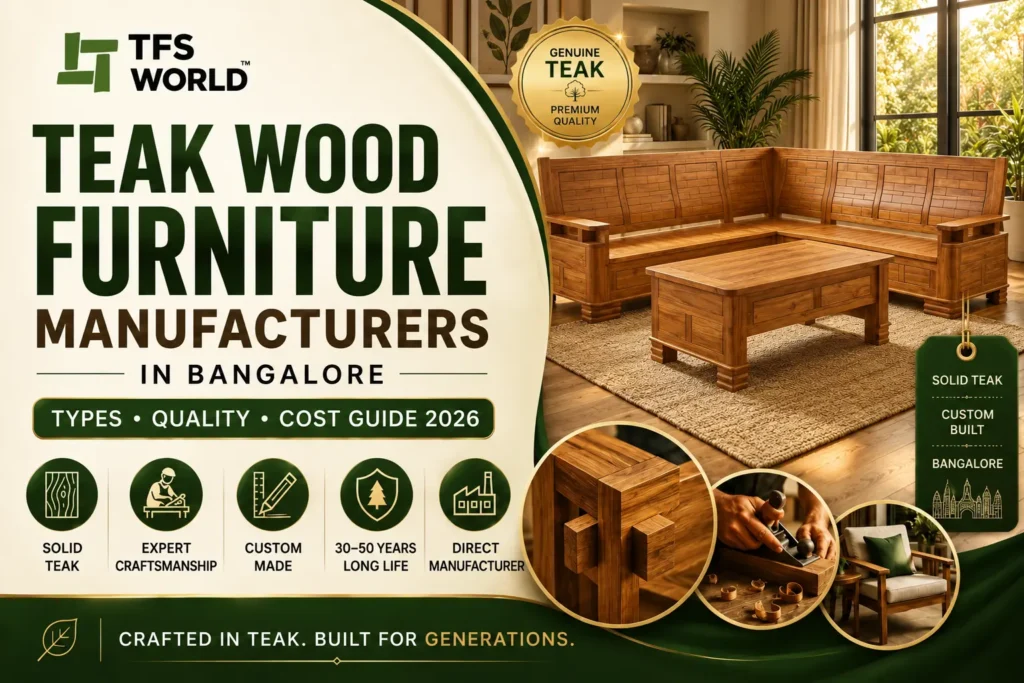
Teak Wood Furniture Manufacturers in Bangalore: Types, Quality & Cost Guide Bangalore has no shortage of teak wood furniture manufacturers, but they are not all cut from the same timber. Some genuinely craft solid teak pieces in their own workshop; others resell mass-produced stock with a teak-look veneer and a premium price tag. If you are comparing teak wood furniture manufacturers in Bangalore, this guide walks through what a real solid-wood piece should cost in 2026, how to spot genuine craftsmanship, and what questions separate a trustworthy maker like TFS World from a middleman. Why Is Teak Wood Popular for Furniture in Bangalore? Furniture takes more daily punishment than almost anything else in a home, chairs get pushed back, tables get leaned on, beds bear weight every night. Teak has earned its reputation because it shrugs off all of it. What Makes Teak Wood Durable? What makes teak wood durable? Quick answer: Teak’s dense grain and natural oils resist termites, moisture and general wear far better than most hardwoods, which is why well-made teak furniture regularly lasts 30 to 50 years or more. Is Teak Wood Suitable for Bangalore’s Climate? Is teak wood suitable for Bangalore’s climate? Quick answer: Yes, very much so. Bangalore’s humid, moderate climate is precisely where teak performs best, resisting the swelling and warping that affects softer woods across monsoon and dry seasons alike. What Are the Benefits of Teak Wood Furniture? Exceptional lifespan — Solid teak furniture can be sanded and repolished repeatedly rather than replaced. Termite and moisture resistance — No chemical treatment needed thanks to teak’s own natural oils. Timeless appearance — A warm golden-brown grain that only deepens and improves with age. Strong resale value — Genuine teak furniture holds its worth far better than engineered alternatives. What Types of Teak Wood Furniture Are Available in Bangalore? A capable manufacturer should cover the full home: living room pieces such as sofas, coffee and console tables and TV units; bedroom furniture including beds, side tables and wardrobes; dining tables, chairs and crockery units; study desks for home offices; and weather-resistant outdoor seating and tables built specifically to handle sun and rain. Custom Teak Wood Furniture This is where a genuine manufacturer earns their reputation. Custom teak wood furniture is built to your exact dimensions, finish and design rather than picked off a factory line, ideal for awkward corners, statement pieces, or matching an existing interior theme. It costs more than ready-made stock but avoids the compromise of forcing a standard size into your space. How Much Does Teak Wood Furniture Cost in Bangalore? Teak wood furniture price in Bangalore depends on the piece, the grade of teak used, and how much customisation is involved. Here is an approximate 2026 price guide. Furniture type Wood quality Approx. price range Major cost factors Dining table (6-seater) Solid teak ₹45,000 – ₹1,20,000+ Grade, size, design complexity Bed (queen / king) Solid teak ₹35,000 – ₹95,000+ Grade, carving, storage features Sofa set (3+1+1) Solid teak frame ₹80,000 – ₹2,50,000+ Grade, upholstery, size Wardrobe (solid shutters) Solid teak ₹60,000 – ₹1,80,000+ Size, hardware, finish TV unit / console Solid teak ₹18,000 – ₹55,000+ Size, design detail Approximate 2026 Bangalore rates for solid teak wood furniture; teak wood furniture in Bangalore can cost less with engineered cores or teak veneer, and more with premium Burma teak and intricate carving. Confirm a written quote before ordering. How Can You Identify High-Quality Teak Wood Furniture? Joinery — Genuine craftsmanship uses mortise-and-tenon or dovetail joints, not staples or visible nails. Weight and grain — Solid teak is heavy and shows continuous grain that flows around edges, not a printed pattern. Smell and oiliness — A faint woody fragrance and a slightly oily surface are signs of real teak. Finish consistency — An even, smooth polish across the whole piece signals careful craftsmanship. How Do You Choose the Right Teak Wood Furniture Manufacturer in Bangalore? What Should You Check About the Manufacturer? What should you check about the manufacturer? Quick answer: Visit their workshop if possible, ask where their teak is sourced, and look at finished pieces in person rather than only in photos, transparency about wood origin is the clearest sign of a genuine manufacturer. Should You Choose Custom or Ready-Made Furniture? Should you choose custom or ready-made furniture? Quick answer: Ready-made suits a quick purchase on a fixed budget; custom teak wood furniture is worth the extra cost and lead time when you need a specific size, statement design, or a piece matched to existing decor. What Warranty or After-Sales Support Should You Look For? What warranty or after-sales support should you look for? Quick answer: Look for at least a one-year structural warranty and ask whether the maker offers repolishing or repair services later, a manufacturer confident in their wood will offer both. What Are the Benefits of Buying Directly From Teak Wood Furniture Manufacturers? Buying from a manufacturer rather than a reseller cuts out the middleman markup and gives you a single accountable point of contact for wood quality, customisation and after-sales support. A genuine teak wood furniture supplier who merely stocks other workshops’ output can rarely tell you the wood’s actual grade or origin with confidence, a manufacturer can, because they cut and finish it themselves. Where Can You Find Teak Wood Furniture Manufacturers in Bangalore? Look for a maker with a physical workshop you can visit, a body of finished work you can inspect, and staff who talk knowledgeably about wood grade rather than just style. Among the established teak wood furniture manufacturers in Bangalore, TFS World is one such destination, a Bangalore-based manufacturer building custom teak wood furniture in-house, from raw timber to finished piece. See solid teak furniture before you buy Visit the TFS World showroom near Jnana Bharathi metro on Mysore Road to touch the wood and inspect the joinery yourself, or explore our furniture collection online. How to Choose the Right Teak Wood Furniture for Your Home? Think about how each piece
Buy Teak Wood Door Frames in Bangalore: Price & Types (2026)
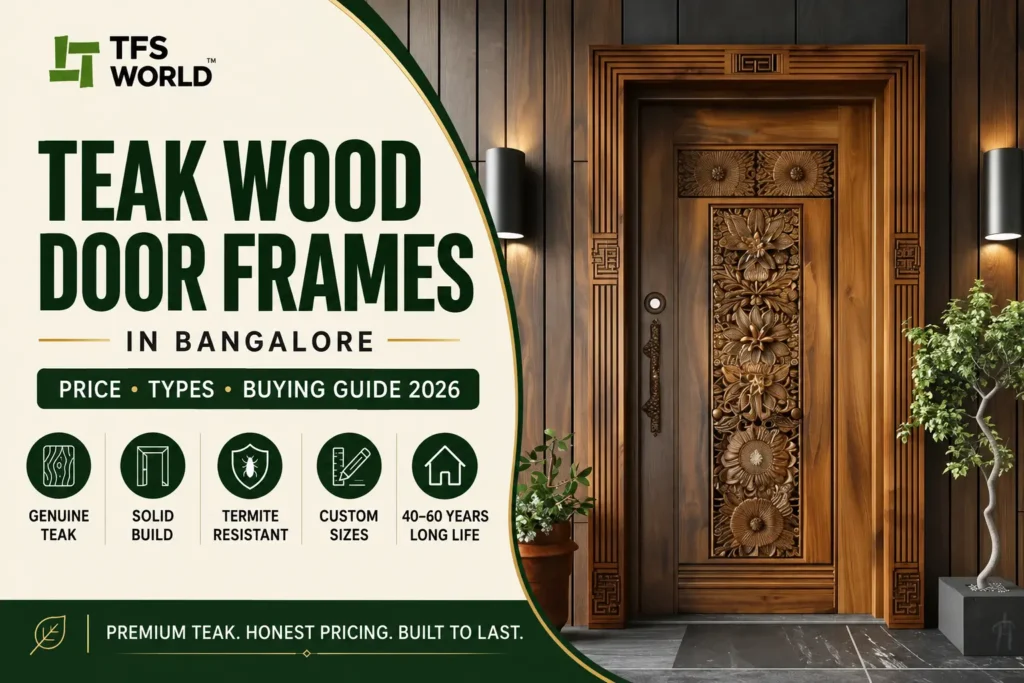
Where to Buy Teak Wood Door Frames in Bangalore: Price, Types & Buying Guide When you set out to buy teak wood door frames in Bangalore, the hard part usually isn’t finding a seller, it’s finding the right one. Walk into any timber market and you’ll hear wildly different prices for what looks like identical “teak,” and it’s easy to overpay for underwhelming wood or underpay for something that won’t survive a single monsoon. This guide breaks down what a genuine teak wood door frame actually costs in Bangalore in 2026, the types on offer, and exactly what to check before you commit, the way our team at TFS World would walk you through it in person. Why Choose Teak Wood Door Frames for Your Home? A door frame carries real structural load every single day, hinges pull on it, doors slam into it, humidity swells and shrinks it. Teak is chosen for frames more than almost any other timber because it handles all of that without complaint. Aesthetics is a bonus! What Makes Teak Wood Durable? What makes teak wood durable? Quick answer: Teak’s high natural oil and silica content makes it exceptionally resistant to termites, fungal decay and moisture, so a well-seasoned teak frame typically lasts 40 to 60 years with only basic care. This is well documented outside the Indian timber trade too: The Wood Database’s teak profile notes its outstanding stability and decay resistance as the reason it remains one of the most sought-after timbers worldwide. Are Teak Wood Door Frames Suitable for Bangalore’s Climate? Are teak wood door frames suitable for Bangalore’s climate? Quick answer: Yes. Bangalore’s moderate but humid climate is exactly the environment teak was built for its natural oils resist moisture absorption, so properly seasoned teak frames rarely warp, swell or crack across seasons. What Are the Benefits of Teak Wood Frames? Structural strength — Holds heavy doors, multiple hinges and repeated daily use without loosening. Termite and pest resistance — Natural oils keep borers and termites away without chemical treatment. Low maintenance — An occasional clean and polish is all a teak frame needs. Resale and property value — Genuine teak frames are a recognised premium feature that buyers notice. Aesthetics — A warm, golden-brown grain that ages gracefully and suits both traditional and modern interiors alike. What Types of Teak Wood Door Frames Are Available in Bangalore? Bangalore’s market offers teak wood frames for doors across a wide quality spectrum. Burma teak sits at the premium end, prized for its tight grain and rich colour. Indian teak (often traded as CP or Nagpur teak) offers a strong middle ground of quality and price. Border or African teak is the budget-conscious solid-wood option, while engineered or teak-veneered frames, a core wrapped in a thin teak veneer, serve tighter budgets or interior, low-moisture openings. What Is the Price of Teak Wood Door Frames in Bangalore? Wood door frame price in Bangalore depends heavily on which of these four types you choose, along with section size and grade. Here is an approximate 2026 price guide for a standard door frame. Frame type Wood quality Approx. price range Key cost factors Engineered / veneered frame Teak veneer over engineered core ₹2,500 – ₹4,500 Core material, veneer thickness Border / African teak Budget solid teak ₹4,500 – ₹7,000 Grade, section size Indian teak (CP / Nagpur) Mid-range solid teak ₹7,000 – ₹12,000 Grade, moisture content, dimensions Burma teak Premium solid teak ₹12,000 – ₹22,000+ Log width, grade, finish Approximate 2026 Bangalore rates for a standard door frame (around 7′ x 3′ opening, 4″–5″ section). Excludes installation, hardware and finishing. Teak wood door frame price varies by section thickness, grade and current market rates; always confirm a written quote. What Should You Check Before Buying a Teak Wood Door Frame? How Do You Check Teak Wood Quality? How do you check teak wood quality? Quick answer: Look for a straight, tight, even grain, real heft (genuine teak is dense), an oily smooth surface and a faint woody fragrance. Prices well below the market range are the clearest warning sign of substitute wood. What Frame Size and Thickness Should You Choose? What frame size and thickness should you choose? Quick answer: Most Bangalore homes use a 4″ x 2.5″ or 5″ x 3″ section for standard doors; match the section to your wall thickness and door weight, and go slightly heavier for main entrance doors. How Important Is Wood Seasoning? How important is wood seasoning? Quick answer: Very. Unseasoned or wet timber shrinks and warps after installation, so insist on kiln- or air-dried teak with a moisture content around 12–15% before it goes into your wall. However, kiln drying frame sections are a double edged sword. If not done properly, the wood will crack and split. Should You Choose a Ready-Made or Custom Frame? Should you choose a ready-made or custom frame? Quick answer: Ready-made frames suit standard openings and cost less; custom frames are worth it for non-standard sizes, heritage homes, or when you want the frame and door built as a matched set. Where Can You Buy Teak Wood Door Frames in Bangalore? A good supplier tells you the wood’s origin and grade without being asked, lets you inspect timber before it’s cut, and offers a warranty on genuine solid teak. Reputation and a visitable workshop matter more than a glossy catalogue. At TFS World, we’ve supplied door and window frames across Bangalore with full transparency on grade and pricing from the same yard where the timber is cut. Get a straight answer on your door frame quote Share your opening size and preferred grade, and TFS World will give you a clear, honest quote with no vague “premium teak” labels. Talk to our door frame team or visit our Mysore Road workshop. Talk to our door frame team How to Choose the Right Teak Wood Door Frame for Your Home? Match the frame to the door it will carry: a heavy solid teak
Window Shutters Bangalore: Prices, Types & Buying Guide (2026) | TFS World

Window Shutters Bangalore: Everything You Need to Know Before Buying Windows do more than let light in they frame your view, guard your privacy and shape how a room feels. And the shutters you fit on them decide how well they do all three. In a city like Bangalore, where bright afternoons, monsoon downpours and a love of natural materials all meet, the right window shutters make a genuine difference to comfort and character. If you are exploring window shutters in Bangalore, this guide covers everything: what shutters are, the wood and material options, realistic prices, honest comparisons, and how to pick a maker you can trust. Let us walk through it, the way we would with a customer at our showroom. What Are Window Shutters? Window shutters are solid or louvered panels fitted to a window within a frame of vertical stiles and horizontal rails. They control light, ventilation, privacy and security, and can be fixed, openable, louvered or sliding. Wooden shutters, especially teak, are prized for durability and a premium look. Unlike curtains or blinds that simply hang, shutters are structural panels built into or mounted onto the window. That solidity is exactly why they last longer and feel more premium. Why They’re a Better Alternative to Traditional Window Panels Compared with flimsy panels or plastic blinds, solid wood window shutters offer better insulation, real durability, superior privacy and a warmth that instantly lifts a room. They also add lasting value to a property in a way disposable window coverings never will. Benefits of Premium Wooden Window Shutters Durability — Solid timber shutters, particularly teak, last for decades. Insulation — Wood naturally moderates heat and sound, keeping interiors comfortable. Privacy and light control — Adjust louvers or panels to get exactly the light and privacy you want. Timeless aesthetics — Handcrafted wooden shutters bring a premium, classic character to any space. Property value — Quality timber window shutters are a recognised premium feature for buyers and tenants. Why Window Shutters Are Popular in Bangalore Homes & Commercial Spaces Bangalore’s mix of strong sun, humid monsoons and design-conscious homeowners makes wooden window shutters a natural fit. They filter harsh afternoon light, stand up to seasonal moisture when made from the right timber, and match everything from heritage bungalows to sleek new apartments. Villas, offices, resorts and cafes across the city increasingly choose custom-made wooden shutters for exactly these reasons. Types of Window Shutters Wooden Window Shutters The classic choice solid, warm and durable, available in a range of species and finishes to suit any interior. Burma Teak Window Shutters The premium tier. Naturally oily, dense and weather-resistant, Burma teak shutters are ideal for Bangalore’s climate and last a lifetime. Honne Wood Window Shutters Honne is one of the hardest woods after teak and a Karnataka favourite for windows, offering excellent strength and stability at a friendlier price. See our Honne wood price guide for details. Engineered Wood Shutters A budget-friendly, stable option that resists warping. Best suited to interior windows and drier locations. Louvered Window Shutters Fitted with angled slats that allow airflow and adjustable light while maintaining privacy, a perennial favourite in warm climates. Sliding Window Shutters Space-saving shutters that glide on a track, ideal for large openings, balconies and modern layouts. Fixed vs Openable Window Shutters Fixed shutters stay put as a permanent screen or design feature, while openable shutters swing or slide for full access and ventilation. Many Bangalore homes mix both across different windows. Why Choose Custom Window Shutters? No two windows and no two homes are identical, which is where made-to-measure shutters earn their keep. Bespoke shutters fit your exact openings, match your chosen wood, finish and hardware, and are built to handle your specific light, privacy and ventilation needs. The result looks intentional and lasts longer, because it is engineered for your window rather than forced to fit. How to Choose the Right Window Shutter Manufacturer in Bangalore The material is only half the story; the maker is the other half. When comparing window shutter manufacturers, weigh these points. Timber quality and transparency — A good maker names the wood species and grade openly and lets you inspect it. Craftsmanship — Look at joinery, louver alignment and finish on existing work. Customization capability — The best window shutter manufacturers build to your dimensions and design. Finishing and hardware — Quality polish, weather sealing and durable stainless hardware matter. After-sales support — Warranty, servicing and repair support signal a maker who stands behind their work. Window Shutters Price Guide in Bangalore Shutter pricing is usually quoted per square foot of finished shutter, and it depends heavily on the wood species, size, finish, hardware and level of customization. Here is an approximate 2026 guide for window shutters in Bangalore. Shutter material Approx. price (per sq ft) Notes Engineered wood shutters ₹250 – ₹600 Budget-friendly, best for interior/dry areas Honne wood shutters ₹600 – ₹1,200 Strong, stable, great value hardwood Burma teak shutters ₹1,200 – ₹3,000+ Premium, weather-resistant, lifetime durability Louvered / sliding (add-on) +₹150 – ₹500 Extra for slats, tracks and hardware Approximate 2026 Bangalore rates. Prices vary based on timber grade, shutter size, design complexity, finish, hardware and installation requirements request a site-specific quote. Burma Teak vs Honne Wood vs Engineered Wood Window Shutters Factor Burma Teak Honne Wood Engineered Wood Approx. price / sq ft ₹1,200 – ₹3,000+ ₹600 – ₹1,200 ₹250 – ₹600 Durability Exceptional (50+ yrs) Very good Moderate Weather resistance Excellent Very good Low to moderate Look & feel Premium golden grain Warm, solid hardwood Uniform, plainer Best for Luxury homes, exteriors Homes wanting value strength Interior, budget windows Teak leads on longevity and looks; Honne offers the best value in solid hardwood; engineered wood suits tighter budgets. Wooden Window Shutters vs Aluminium vs uPVC Factor Wooden Shutters Aluminium uPVC Look & warmth Premium, natural, warm Modern, industrial Functional, plain Durability Decades (solid wood) Long, but can dent 10 – 20 years Insulation Excellent (heat & sound) Poor (conducts
Burma Teak Wood Price in Bangalore (2026): Latest Rates & Buying Guide | TFS World

Burma Teak Wood Price in Bangalore: Latest Rates & Buying Guide If teak is the king of hardwoods, Burma teak wears the crown. For Bangalore homeowners, architects and furniture lovers, it represents the gold standard the wood you choose when you want a door, floor or dining table that your grandchildren will still be using. But that reputation comes with a price tag, and plenty of confusion about what genuine Burma teak actually costs. This guide gives you the latest Burma teak wood price in Bangalore for 2026, explains the grades and factors behind the numbers, and shows you how to tell the real thing from the many pretenders in the market. Because when you are paying premium-hardwood money, you deserve premium-hardwood certainty. What is the latest Burma teak wood price in Bangalore? Quick answer: In 2026, genuine Burma teak wood costs roughly ₹7,500 to ₹9,500+ per CFT in Bangalore, with wide, long, top-grade logs reaching the upper end and beyond. Prices vary by grade, log size, moisture content and availability, and usually exclude taxes, cutting and transport. What is Burma Teak Wood? Origin and Characteristics Burma teak grows in the natural monsoon forests of Myanmar (formerly Burma). Slow growth in the wild gives it a tighter grain, higher oil content and greater density than plantation-grown teak. If you are curious about how it reaches Bangalore, our story on the journey of Burma teak from Myanmar to your home is worth reading. Why It Is Preferred Over Other Teak Varieties Burma teak’s oils and silica make it outstandingly resistant to water, termites and warping, while its warm golden hue and even grain are simply more beautiful than most alternatives. Our comparison of teak vs Burma teak explains the gap in detail. Common Applications in Furniture and Interiors It is the first choice for premium furniture, main doors, window frames and shutters, staircases, flooring and luxury interiors, anywhere durability and looks both matter. Latest Burma Teak Wood Price in Bangalore Here is the current picture of the Burma teak wood price per CFT in Bangalore, broken down by grade and log size, which are the biggest drivers of cost. Grade / log size Price per CFT (2026) Typical use Standard grade (narrow logs, ~5 ft) ₹6,900 – ₹7,500 General joinery, frames Good grade (6 – 7 ft logs) ₹7,500 – ₹8,100 Doors, quality furniture Premium grade (8 – 12 ft logs) ₹8,100 – ₹9,100 Premium furniture, interiors Top grade (13 – 14 ft, wide logs) ₹9,100 – ₹9,500+ Luxury doors, heirloom pieces Approximate 2026 Bangalore rates for genuine Burma teak. The Burma teak wood cost in Bangalore varies with grade, size, moisture and availability, and excludes taxes, cutting and transport (add ~15–20%). Factors Affecting Burma Teak Wood Prices Grade and quality — Higher grades with tighter grain and fewer defects cost more. Log size and thickness — Wider, longer logs are rarer and priced higher per CFT. Moisture content — Properly seasoned timber is more stable and more expensive than green wood. Imported vs locally available stock — Genuine imported Burma teak commands a premium over substitutes. Market demand and supply — Post-2014 export limits keep genuine Burma teak scarce and prices firm. Burma Teak Price Per CFT Explained Timber is measured in cubic feet, or CFT calculated as length × width × thickness in feet. When you see the Burma teak wood price per CFT in Bangalore, that figure covers one cubic foot of finished timber. Because wide, long logs waste less and yield more usable planks, they carry a higher per-CFT rate than small cut pieces. Understanding this is the key to comparing quotes fairly. If you want help converting your door or furniture requirement into CFT, our timber cut sizes service makes the maths simple. Burma Teak vs Other Teak Wood How does genuine Burma teak stack up against the alternatives crowding Bangalore’s market? This comparison makes the differences and the price gaps clear. Type Price / CFT Durability Appearance Best applications Burma Teak ₹7,500 – ₹9,500+ Exceptional (50+ yrs) Rich golden, tight even grain Luxury doors, furniture, flooring Indian Teak ₹3,500 – ₹7,500 Very good Golden-brown, slightly coarser Furniture, frames, joinery African Teak ₹2,500 – ₹4,500 Good Paler, more variable grain Budget furniture, frames Plantation Teak ₹1,500 – ₹3,000 Moderate Lighter, wider growth rings Economy, non-structural use Genuine Burma teak sits at the top for durability and looks, which is why its cost is higher than every alternative. How to Identify Genuine Burma Teak Wood With prices this high, imitation is everywhere. These checks help, and our four-test Burma teak guide walks through each one. Grain pattern — Straight, tight, even grain with occasional dark streaks. Color and texture — A warm, deep golden-brown that mellows with age; a smooth, oily surface. Natural oil content — A distinctive leathery, woody scent and water-resistant, slightly greasy feel. Weight and density — Genuine Burma teak is notably heavy and dense. Signs of fake or low-grade teak — Suspiciously low prices, pale or blotchy colour, a dry chalky feel, or no teak fragrance. Things to Check Before Buying Burma Teak Wood grade — confirm the grade and log size in writing. Moisture level — insist on seasoned timber and, ideally, a moisture reading. Supplier credibility — buy from an established yard with import documentation. Quality certification — ask for sourcing and import papers for genuine Burma teak. Delivery and cutting charges — clarify these upfront to avoid surprises in the final bill. Common Uses of Burma Teak Burma teak’s versatility is part of its value. It is the wood of choice for premium furniture, doors and windows, staircases, wooden flooring, outdoor furniture and luxury interiors. Our piece on why Burma teak is the king of flooring shows it at its best. Why Burma Teak is Worth the Investment Exceptional durability — It routinely lasts 50 years and more. Natural termite resistance — Built-in oils keep pests away without chemicals. Premium appearance — A rich, warm grain that only improves