

Types of Wooden Flooring: Complete Guide for Indian Homes
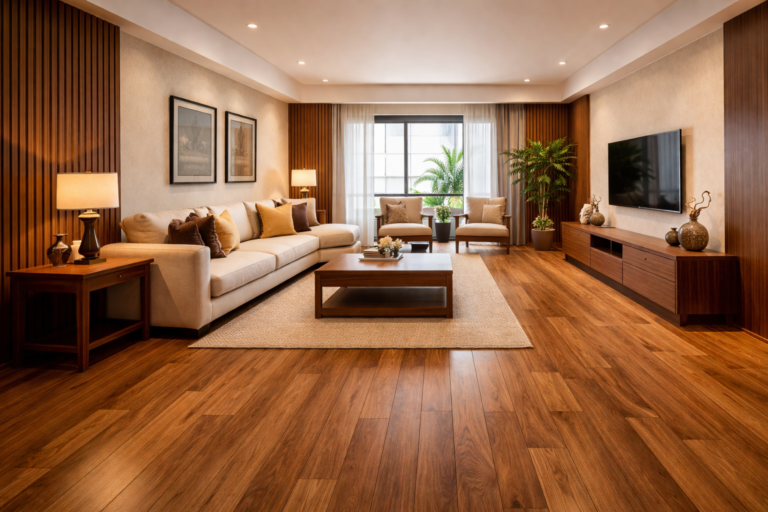
Choosing wood flooring for your Indian home means navigating claims, options, and price ranges that vary wildly. Some products cost ₹110 per square foot. Others demand ₹ upto ₹2500/sq ft. Are the expensive ones worth it? Is the cheap option a trap?
This guide breaks down exactly what you’re paying for, what each type actually delivers, and which option matches your specific situation—whether that’s a coastal apartment in Mumbai or a villa in Bangalore.
Understanding What You're Actually Buying
The wood flooring market includes four distinct categories. Each uses different materials, performs differently, and costs differently. Knowing the difference prevents expensive mistakes.
Here’s what separates them:
The Quick Comparison: All Four Types at a Glance
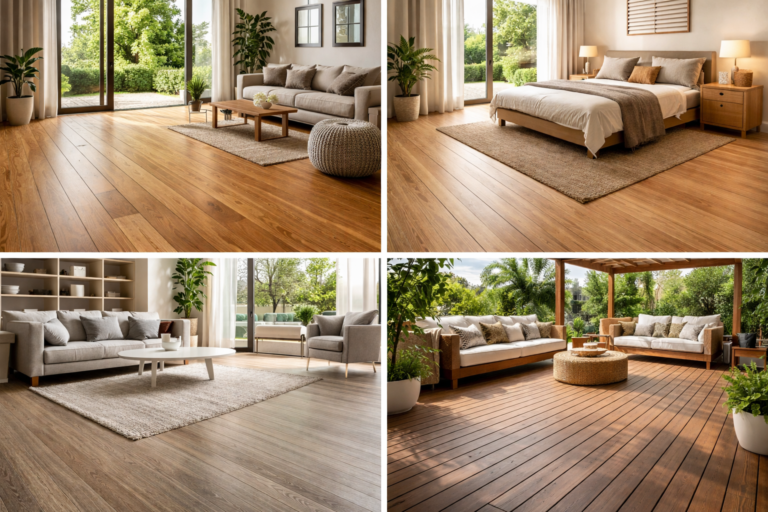
| Feature | Solid Hardwood | Engineered Wood | Laminate | Outdoor Decking |
|---|---|---|---|---|
| Material | 100% real wood (Burma Teak, Walnut, Ebony, Merbau, Ironwood) | Real wood veneer on plywood/HDF | Photo image on HDF | IPE – Brazilian Wood |
| Cost / sq. ft. | ₹700+ | ₹500+ | ₹110 – ₹300 | ₹600 – ₹900 |
| Lifespan | 20 – 30 years | 10 – 20 years | 5 – 15 years | 10 – 20 years |
| Refinishing | Once in 10 years | Not required | Not possible | Minimal required |
| Humidity Tolerance | High | Medium | Low | Extreme |
| Installation | Professional required | Moderate – Easy | DIY-friendly | Professional required |
| Authenticity | Real wood grain | Real wood top layer | Laminate finish | Ipe wood |
Now let’s understand what each type actually means for your home.
Type 1: Solid Hardwood Flooring (The Traditional Choice That Lasts Generations)
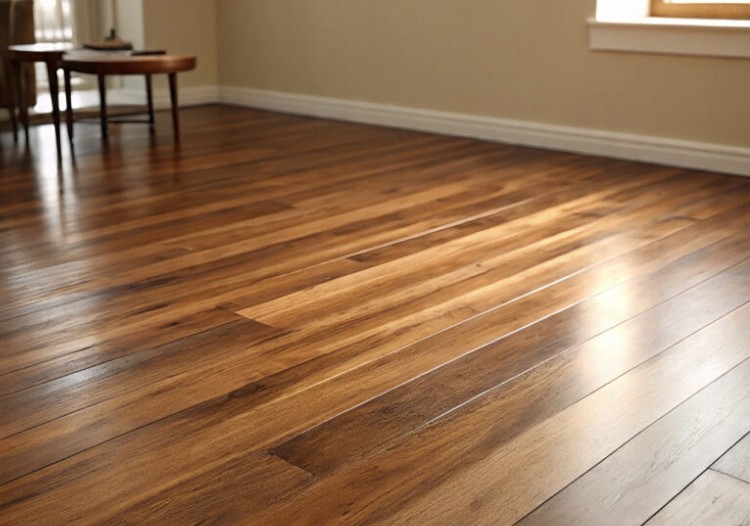
This is pure wood flooring cut from single trees. No composites. No veneers. Solid wood all the way through.
What TFS World Offers in Solid Hardwood
Burma Teak: Premium option with natural oils that repel moisture. The wood temples and palaces chose for centuries.
Walnut: Rich, dark tones with beautiful grain patterns. Exceptional durability and timeless elegance.
Ebony: Premium dark hardwood with distinctive appearance. High density and natural resistance.
Merbau: Dense, reddish-brown hardwood. Exceptional durability for high-traffic areas.
Ironwood: Commercial-grade hardness. Resists dents and scratches better than most alternatives.
When Solid Hardwood Makes Sense
Choose it for: Bedrooms, living rooms, homes where flooring is a long-term investment.
Skip it if: You’re in a high-humidity coastal area without climate control, or you’re working with a tight budget.
The value proposition: Higher initial cost, but refinishable multiple times. The floor that serves your grandchildren.
Type 2: Engineered Wood Flooring (The Smart Solution for Indian Climates)
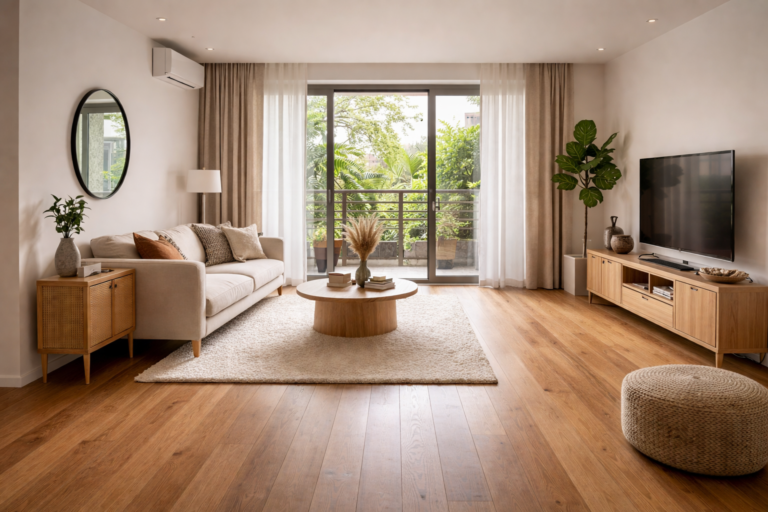
Here’s what engineered means: 2-6mm real wood (teak, ash) bonded to a plywood core.
This construction isn’t about cutting costs—it’s about handling what Indian climates actually do to floors.
Why Engineered Wood Solves Real Problems
Humidity resistance: Handles Mumbai and Chennai’s coastal moisture without warping. The plywood core expands and contracts less than solid wood.
Climate stability: Perfect for Bangalore’s variable weather. Seasonal changes don’t cause gaps or buckling.
Installation flexibility: Click-lock systems available. Faster installation, less disruption.
Real wood surface: The top layer is genuine wood. You get authentic grain patterns and feel.
When Engineered Wood Is Your Best Choice
Choose it for: Apartments, coastal cities, any location with significant humidity variation, buyers who want real wood with practical performance.
Skip it if: You don’t have refinishing options (engineered doesn’t allow refinishes vs. solid wood’s multiple refinishes).
The value proposition: Better climate performance than solid wood at lower cost. Smart compromise between authenticity and practicality.
Type 3: Laminate Wood Flooring (The Budget Option with Honest Limitations)
Let’s be clear about what laminate is: it’s NOT real wood. It’s a synthetic product with laminate on top.
What Laminate Actually Delivers
Cost advantage: Cheapest option by far. ₹110-300 per square foot installed.
Scratch resistance: Harder surface than many real woods. Resists daily wear well.
DIY installation: Click-lock systems most homeowners can install themselves.
Low maintenance: No polishing, no sealing, minimal care required.
Hypoallergenic: No wood dust, no natural oils. Better for severe allergy sufferers.
What Laminate Cannot Do
Refinishing: Impossible. Once it’s damaged, replacement is the only option.
Sun exposure: Fades in direct sunlight. Not ideal for rooms with large windows.
Water vulnerability: Despite water-resistant claims, avoid wet areas completely.
Shorter lifespan: 5-15 years typical. A fraction of solid wood’s longevity.
Authenticity: Looks like wood from a distance. Feels synthetic up close.
When Laminate Makes Practical Sense
Choose it for: Rental properties, bedrooms on tight budgets, temporary solutions, rooms with minimal foot traffic.
Skip it if: You want authentic wood feel, plan to stay long-term, have areas with moisture exposure, value refinishing options.
The value proposition: Lowest cost entry to wood-look flooring. Honest about what it is and isn’t.
Type 4: Outdoor Decking (Why Only IPE Wood Works)
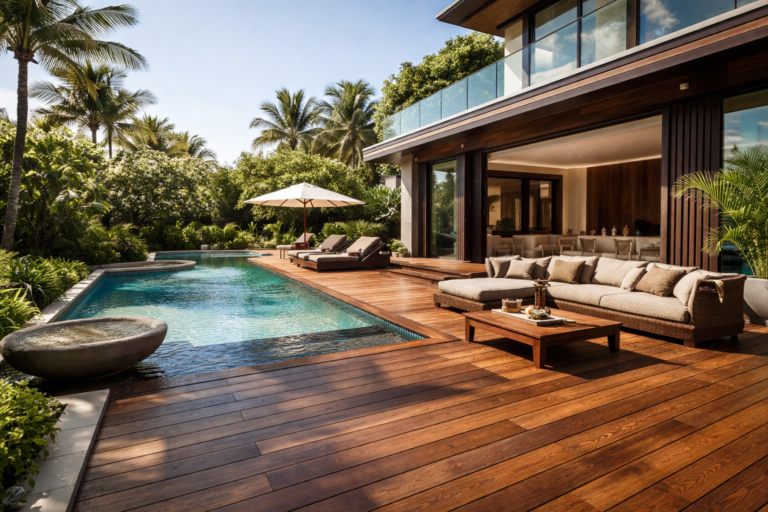
For outdoor spaces, TFS World offers one option: IPE wood.
This isn’t limited selection—it’s honest expertise. Other woods simply don’t survive Indian outdoor conditions long-term.
Why IPE Wood Dominates Outdoor Applications
Natural water repellent: Built-in oils resist rain without treatment or sealing.
Insect resistance: Termites and other insects avoid IPE naturally.
Sun durability: Withstands harsh sun exposure. Develops attractive silver-gray patina over time.
Temperature stability: Handles extreme heat without splintering or warping.
International standards: US and European certifications confirm quality.
Exceptional hardness: One of the densest hardwoods available. Resists scratches and dents.
Where to Use Outdoor IPE Decking
Perfect for patios, balconies, poolside areas, and terraces. Any outdoor space where inferior woods fail within 3-5 years.
How to Choose Based on Your Specific Situation
Match your wood flooring to your real conditions, not marketing promises.
Climate-Based Selection
DRY CLIMATE (Delhi, Rajasthan, Hyderabad): Choose solid Burma Teak, Walnut, or Ebony. Dry air reduces warping risk. Invest in quality that lasts.
HUMID CLIMATE (Mumbai, Chennai, Goa): Choose engineered wood or Merbau. Humidity demands dimensional stability. Don’t fight physics.
MODERATE CLIMATE (Bangalore, Pune): Any type works with proper installation. Choose based on budget and preferences.
Budget-Based Selection
TIGHT BUDGET: Choose laminate. Acknowledge limitations. Plan replacement timeline.
MAXIMUM DURABILITY: Choose solid Ironwood or Burma Teak. Higher cost, longest lifespan, best value per year.
BALANCED APPROACH: Choose engineered wood. Real wood surface, practical performance, reasonable cost.
H2: Location-Based Selection
OUTDOOR SPACES: Choose IPE wood only. Everything else fails prematurely.
Understanding Total Costs (Not Just Material Prices)
Material cost is one component. Here’s the complete picture:
Material: ₹110-2500 per square foot (varies by type and grade)
Installation: ₹50-350 per square foot (professional labor)
Underlayment: ₹20-40 per square foot (moisture barrier, sound reduction)
Finishing: ₹30-80 per square foot (sealing, polishing for applicable types)
Wastage: Add 5-10% (cutting, fitting, breakage)
Real Example: 1000 Square Foot Installation with Laminate
Material cost: ₹1,10,000 (at ₹110/sq ft)
Installation labor: ₹20,000 (at ₹20/sq ft)
Wastage allowance: ₹5,000 (approximately 5%)
Total project cost: ₹1,35,000 (Gst and Transport Extra)
This example shows why material price alone misleads. Installation and preparation add significantly.
Why TFS World Delivers More Than Materials
TFS World isn’t just selling wood flooring—they’re providing complete solutions backed by rare expertise.
What Sets TFS Apart
Direct forest sourcing: No middlemen inflating prices or compromising quality.
50+ years timber expertise: Three generations of wood knowledge applied to every project.
Burma Teak specialists: Deep expertise in the wood that performs best for Indian conditions.
Complete installation service: Professional teams handling entire process, not just material delivery.
After-sales support: Rare in the industry, standard at TFS World.
Custom solutions: Flexible approaches for unique requirements or challenging spaces.
Location: Metro Pillar 497, Jnana Bharathi Metro Station, Bangalore
Products: Burma Teak, Walnut, Ebony, Merbau, Ironwood, Ash in solid, engineered, and outdoor configurations.
Frequently Asked Questions
Solid is 100% wood throughout. Engineered has real wood veneer on the plywood core. Solid lasts longer and allows more refinishing. Engineered handles humidity better and costs less.
Burma Teak works everywhere. Engineered wood for humid coastal regions. Laminate for dry areas only. Climate matters more than personal preference.
₹110/sq ft (laminate) to ₹2500/sq ft (premium solid- Starting Range). Engineered starts from ₹500/sq ft. Add installation, underlayment, and finishing to material costs.
Yes. Laminate and engineered wood can install over tiles with proper underlayment. Saves removal costs and time.
Engineered wood flooring works in dry kitchen areas only. Avoid near sinks, stoves, or wet zones regardless of type.
TFS World at Jnana Bharathi Metro Station. 50+ years expertise, all wood types, complete installation service, and after-sales support included.
Related Post
 African Teak Wood Price in Bangalore (2026): Complete Buying Guide
 Top Wood Door Manufacturers in Karnataka: How to Choose (2026)
 Buy Vascal Doors in Bangalore: Complete 2026 Buying Guide
 Best Wood for Doors and Windows in India: 2026 Comparison Guide
 Best Wood for Home Interiors in Bangalore: Complete Guide (2026)
 Wooden Pooja Room Doors in Bangalore: Designs, Price & Buying Guide
 Teak Wood Furniture Manufacturers in Bangalore: Types & Cost (2026)
 Buy Teak Wood Door Frames in Bangalore: Price & Types (2026)
 Window Shutters Bangalore: Prices, Types & Buying Guide (2026) | TFS World
 Burma Teak Wood Price in Bangalore (2026): Latest Rates & Buying Guide | TFS World
 Teak Wood Price Per CFT in Bangalore (2026): Latest Rates & Buying Guide | TFS World
 Best Wooden Furniture Shops in Bangalore for Premium Home Interiors | TFS World
 Wooden Flooring Cost in Bangalore 2026: Complete Pricing Guide | TFS World