

Teak Wood Pooja Door Price in India (2026 Complete Guide)
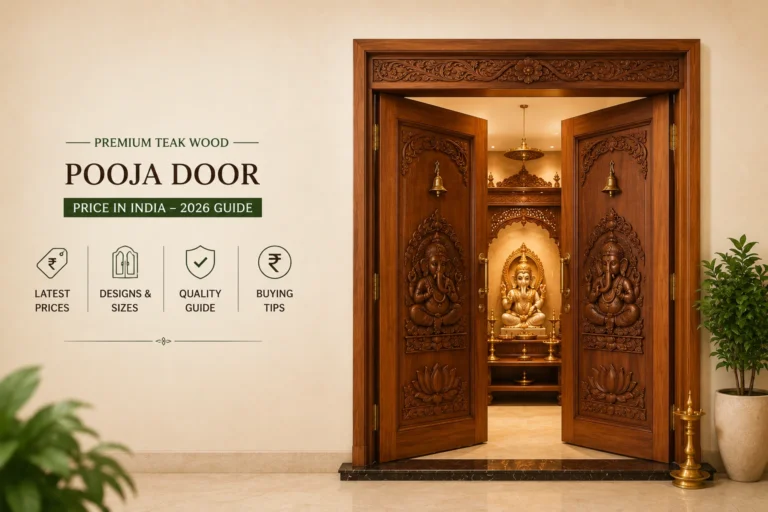
The pooja room door is one of the most considered purchases in an Indian home. It’s not just a door — it’s the entrance to a space that carries significant personal and spiritual meaning. Getting the teak wood pooja door price right means understanding what drives the cost, what the quality differences actually look like, and where to buy without overpaying or compromising on craftsmanship. This 2026 guide covers all of that — with real price ranges, honest comparisons, and practical advice for buyers across India.
What Makes Teak Wood the Best Choice for Pooja Doors?
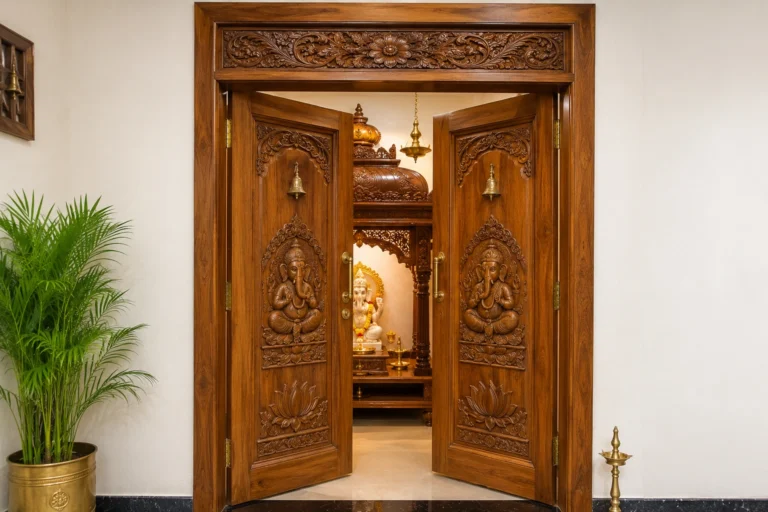
Teak has been the wood of choice for pooja room doors in Indian homes for generations — and for reasons that go beyond tradition.
- Natural durability: Teak contains high levels of natural oils that make it resistant to moisture, insects, and fungal growth. A pooja room door in teak can last 30 to 50 years with basic care
- Dimensional stability: Teak doesn’t warp, swell, or shrink significantly with seasonal humidity changes — important in regions with pronounced monsoon seasons
- Takes carving exceptionally well: The grain is straight and the wood is firm but workable, which makes it ideal for the intricate deity motifs, floral patterns, and geometric designs typically used on pooja doors
- Develops character over time: Teak’s colour deepens and mellows with age, developing a rich golden-brown tone that becomes more beautiful with years of light and use
- Holds polish and finish well: Whether you want a natural oil finish, a high-gloss lacquer, or a satin PU coating, teak takes all finishes consistently and maintains them longer than most alternatives
No other wood combines all of these qualities in the same way. That’s why teak remains the preferred material for pooja doors despite being one of the more expensive wood options available.
Teak Wood Pooja Door Price in India (2026 Updated Rates)
Prices vary based on size, design complexity, wood grade, and where you buy. The table below gives you a practical reference for 2026 market rates across India:
| Category | Standard (B-Grade Teak) | Premium (A-Grade Teak) | Custom / Burma Teak |
|---|---|---|---|
| Small Door (2×4 ft) | ₹8,000 – ₹12,000 | ₹14,000 – ₹20,000 | ₹22,000 – ₹35,000 |
| Standard Door (2.5×5 ft) | ₹12,000 – ₹18,000 | ₹20,000 – ₹32,000 | ₹35,000 – ₹55,000 |
| Large Door (3×7 ft) | ₹18,000 – ₹28,000 | ₹35,000 – ₹50,000+ | ₹55,000 – ₹90,000+ |
| Double Door with Frame | ₹25,000 – ₹40,000 | ₹50,000 – ₹85,000+ | ₹80,000 – ₹2,00,000+ |
All prices are approximate 2026 market rates and may vary based on location, carving complexity, hardware included, and supplier. Prices above are for the door only and do not include installation unless specified.
Price by Size (Standard vs Custom)
Standard pooja door sizes typically run between 2×4 ft and 2.5×5 ft for single leaf doors, and 3×6 ft or 3×7 ft for double leaf sets. Custom sizes — necessary when your pooja room has a non-standard opening — typically add 15–30% to the base price because they require bespoke cutting, frame fabrication, and sometimes additional material.
Price by Design (Plain, Carved, Glass Panel)
- Plain / simple design: Flat panels with minimal ornamentation. Least expensive. Generally ₹8,000 – ₹20,000+ depending on size and wood grade
- Carved design (medium complexity): Geometric patterns, floral borders, traditional motifs. Most popular choice. Generally ₹20,000 – ₹50,000+
- Heavily carved (deities, intricate patterns): Ganesha, Lakshmi, peacock, or full deity panels with detailed workmanship. ₹45,000 – ₹1,50,000+ depending on size and detail level
- Glass panel inserts: Frosted or etched glass within a teak frame. Adds ₹3,000 – ₹8,000 to the base price depending on glass type and panel count
Price by Grade (A-Grade vs B-Grade Teak)
Not all teak is the same. The difference between wood grades affects both price and performance:
- A-Grade (African / Burma plantation teak): Dense, straight-grained, high oil content, minimum knots. Best durability and appearance. Commands a 30–50% premium over B-grade
- B-Grade (Ghana / other Plantation teak): Acceptable quality for most applications. Slightly lower oil content, may have more variation in grain and White mix. More affordable — good value for standard pooja doors
- Reclaimed / salvage teak: Old-growth teak recovered from demolished buildings or structures. Often denser than plantation-grown teak. Prices vary widely depending on source and condition
Factors That Affect Teak Wood Pooja Door Price
Wood Quality and Origin
The source of the teak matters more than most buyers realise. Burma teak from Myanmar is the global benchmark — slow-growing, extremely dense, with the highest natural oil content. Kerala plantation teak is a strong domestic option. African teak is a highly durable and serves as a sustainable and budget – friendly and alternative to Burma teak, with striking grain patterns and excellent resistance. Always ask for species confirmation and origin information when comparing quotes.
Carving Complexity and Design Work
Hand carving is where cost can vary most significantly. A skilled craftsman working on a traditional Ganesha or Lakshmi motif may spend 15–30 hours on a single door — this labour cost is directly reflected in the price. CNC-carved designs are faster and cheaper but lack the depth and variation of hand carving. The best doors combine CNC for structural accuracy and hand finishing for detail work.
Hardware and Finish
Hardware — hinges, handles, locks, and decorative fittings — significantly affects both the look and the long-term performance of a pooja door. Brass hardware is traditional and highly regarded for pooja rooms; stainless steel is more practical in high-humidity environments. Finish choices (PU lacquer, teak oil, hand-rubbed polish) also affect final cost. Budget an additional ₹3,000 – ₹15,000 for quality hardware on a premium teak door.
Popular Teak Wood Pooja Door Designs and Their Cost
- Ganesha motif (single leaf): A central Ganesha figure with floral border. One of the most requested designs for pooja room doors. ₹25,000 – ₹60,000 depending on size and carving depth
- Lotus panel door: Repeated lotus motif panels, elegant and widely liked across regions. ₹18,000 – ₹45,000
- Peacock double door: Matching peacock designs on each leaf — popular in South Indian homes. ₹40,000 – ₹1,20,000 for a full double door set
- Geometric jali pattern: Lattice-style carving with intricate geometric cutouts. Works well with backlighting or frosted glass inserts. ₹30,000 – ₹80,000
- Plain arch-top door: Simple design with an arched top frame — understated and timeless. ₹25,000 – ₹55,000+
- Full deity panel (double door): Complete deity scene across both door leaves — the most elaborate and most expensive option. ₹80,000 – ₹2,00,000+
Teak Wood vs Other Wood Pooja Doors – Which One is Worth It?
| Wood Type | Pros | Cons |
|---|---|---|
| Teak | Best durability, moisture resistance, carving quality, holds finish well | Higher cost; plantation teak can vary in quality if poorly sourced |
| Honne (Merbau) | Very hard, stable, takes fine carving well, good value vs teak | Less widely available; fewer craftsmen experienced with it |
| Rosewood | Beautiful grain, premium appearance, excellent finish | Expensive, harder to source, government restrictions in some states |
| Sheesham | More affordable, good carving wood, decent durability | Less moisture resistant than teak, may need more maintenance |
| Pine | Affordable, lightweight | Not suitable for exterior-facing pooja doors, prone to moisture damage |
For a pooja room door specifically — where the door faces some exposure and carries cultural significance — teak remains the strongest all-round choice. Honne wood is a worthy alternative for buyers in Karnataka and South India who want comparable performance at a lower price point.
How to Choose the Right Teak Wood Pooja Door for Your Home
- Measure the opening first: Before looking at any designs, measure your door opening — height, width, and frame thickness. Custom sizing adds cost and time, so knowing your dimensions upfront helps you budget accurately
- Decide on single vs double leaf: Double doors make a stronger visual statement but need more space to swing open. A 3 ft wide opening is typically the minimum for comfortable double door use
- Choose the carving level based on room scale: Heavily carved doors suit larger pooja rooms and grander home interiors. In a compact pooja room or apartment, a simpler carved design or a plain door with quality wood and finish often looks more appropriate
- Confirm wood grade before ordering: Ask for the species name, origin, and grade in writing. Reputable suppliers will have no hesitation providing this
Planning Custom Door Design?
Metro Pillar no. 497, Near Jnana Bharathi Metro Station, Off Mysore Road, Bangalore - 560039
Where to Buy Teak Wood Pooja Doors in India
Local Carpenter vs Ready-Made
A skilled local carpenter can build a custom door to your exact requirements — and in smaller towns and cities, this is often the most practical option. The challenge is quality control: without seeing finished work from that specific carpenter, it’s difficult to assess their skill level. Ready-made doors from established manufacturers offer more predictability in quality and finish, but less flexibility in dimensions and design.
Online vs Offline — Pros and Cons
- Online: Convenient for browsing designs and comparing prices. Risk of colour and finish looking different in person than on screen. Shipping a large wooden door adds cost and risk of damage. Best suited for smaller, lighter designs or buyers in cities without good local options
- Offline (showroom / manufacturer): You can touch and examine the wood, see the actual finish, and discuss customisation directly. Better for large, expensive, or intricately carved doors where you want to see exactly what you’re getting before committing
Why Buy from TFS World
TFS World is a Bangalore-based specialist in premium teak and honne wood furniture and doors. Unlike furniture stores that stock doors as an add-on product, TFS World’s core expertise is in high-quality hardwoods — which means they understand grain selection, seasoning, and the carving techniques that produce doors that last.
For pooja room doors specifically, TFS World offers: custom sizing to your exact opening, choice of teak grades (plantation or premium), a range of traditional South Indian carving designs, and experienced installation in Bangalore. They also work with honne wood — a premium alternative to teak that’s harder to find but well worth considering for buyers in Karnataka.
Tips to Maintain Your Teak Wood Pooja Door
- Dust regularly with a dry cloth: Don’t let dust and incense residue accumulate in carved details — a soft brush works well for reaching into carved patterns
- Apply teak oil or wood polish every 6–12 months: This maintains the natural finish, prevents the wood from drying out, and keeps the colour rich. Wipe off excess oil after application
- Avoid harsh chemical cleaners: Acidic or alkaline cleaning products can damage the wood finish and strip natural oils. A slightly damp cloth with mild soap is sufficient for cleaning
- Check the frame seal annually: The joint between door frame and wall can develop gaps over time. Seal with wood filler or putty if cracks appear to prevent moisture ingress
- Keep incense ash away from the wood surface: Incense ash is mildly alkaline and can discolour wood over time. Use a deep ash catcher and keep the door surface clean
- Sand and refinish every 7–10 years if exposed: Pooja room doors that are regularly near agarbatti smoke or humidity may need a light sanding and fresh polish coat at this interval to maintain their appearance
Get a Custom Quote for Your Dream Door
Premium Teak Wood & Honne Wood Doors Custom Crafted in Bangalore
FAQs on Teak Wood Pooja Door Price
A standard teak wood pooja door (2.5×5 ft, medium carving, B-grade plantation teak) costs approximately ₹12,000 to ₹28,000. A premium A-grade teak door of the same size ranges from ₹25,000 to ₹50,000. Custom sizes, Burma teak, and intricate carving can push prices to ₹1,00,000 or more for large double door sets.
A-grade teak (African or Burma origin) is denser, more uniform in grain, with higher natural oil content and better resistance to warping and moisture. B-grade teak (Ghana or lower-grade plantation) is slightly less dense and may have more grain variation, but is perfectly suitable for most residential pooja room applications at a meaningfully lower price.
Double doors make a more traditional and ceremonially significant entrance to the pooja space — and visually they’re more impressive. However, they need a wider opening (typically 2.5 ft minimum for both leaves to open comfortably) and cost significantly more than a single door. For compact apartments and smaller pooja rooms, a single door with good carving is often more practical and better proportioned.
A well-made teak wood pooja door from properly seasoned wood should last 30 to 50 years with reasonable care. The key variables are wood grade (higher oil content = longer lifespan), quality of the finish applied, and how much moisture and incense smoke exposure the door sees regularly.
Yes — frosted, etched, or coloured glass panels within a teak frame are popular for pooja rooms where some visibility into the space from outside is wanted (for example, to see the diya without opening the door fully). Glass panels add ₹3,000 – ₹8,000 to the base price depending on glass type and panel count.
Ganesha motif doors are the single most requested design across India. Peacock double doors are popular in South Indian homes. Lotus panel designs are elegant and widely liked. For contemporary homes, geometric jali-pattern doors or simple arch-top designs with natural wood grain visible (rather than heavy carving) are growing in popularity.
Yes. TFS World in Bangalore makes custom teak and honne wood doors to specific dimensions and design requirements. They can work with traditional South Indian carving motifs or contemporary designs, and offer both plantation teak and premium grade teak options. Contact them at 9036068435 or visit tfsworld.in to discuss your project.
Conclusion
The teak wood pooja door price in India in 2026 ranges from ₹8,000 for a small plain door to over ₹2,00,000 for a large custom-carved double door set in premium teak. What matters most isn’t finding the lowest price — it’s finding the right combination of wood grade, design, and craftsmanship for your specific pooja space.
Teak remains the best material for this application: durable, beautiful, and suited to the cultural significance of the pooja room. Get the grade right, confirm the wood is properly seasoned, and work with a craftsman who understands traditional South Indian woodwork.
TFS World can help you make the right choice for your home. Reach out at 9036068435 or visit tfsworld.in to see current designs and get a quote.
Related Post
 African Teak Wood Price in Bangalore (2026): Complete Buying Guide
 Top Wood Door Manufacturers in Karnataka: How to Choose (2026)
 Buy Vascal Doors in Bangalore: Complete 2026 Buying Guide
 Best Wood for Doors and Windows in India: 2026 Comparison Guide
 Best Wood for Home Interiors in Bangalore: Complete Guide (2026)
 Wooden Pooja Room Doors in Bangalore: Designs, Price & Buying Guide
 Teak Wood Furniture Manufacturers in Bangalore: Types & Cost (2026)
 Buy Teak Wood Door Frames in Bangalore: Price & Types (2026)
 Window Shutters Bangalore: Prices, Types & Buying Guide (2026) | TFS World
 Burma Teak Wood Price in Bangalore (2026): Latest Rates & Buying Guide | TFS World
 Teak Wood Price Per CFT in Bangalore (2026): Latest Rates & Buying Guide | TFS World
 Best Wooden Furniture Shops in Bangalore for Premium Home Interiors | TFS World
 Wooden Flooring Cost in Bangalore 2026: Complete Pricing Guide | TFS World