

How to Identify Genuine Burma Teak: 4 Tests Anyone Can Do Before Buying
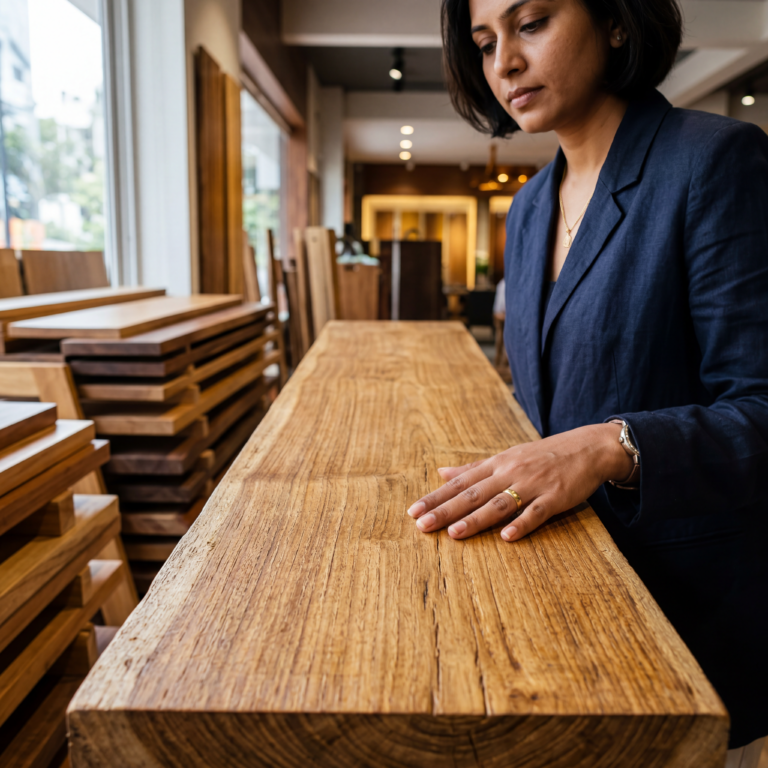
When Burma teak prices in Bangalore range from ₹4,000 to ₹18,000 per cubic foot, knowing basic identification indicators protects your investment. These four tests won’t give you laboratory certainty — even experienced timber professionals can’t always distinguish premium Burma teak from high-quality African or plantation alternatives by eye alone — but they provide enough knowledge to ask intelligent questions and identify obvious fakes.
Critical Understanding: These are indicators and signs, not foolproof identification methods. Use them to eliminate obvious misrepresentations, then verify authenticity by working with established, trusted suppliers.
Test 1: Weight and Density — The First Clue
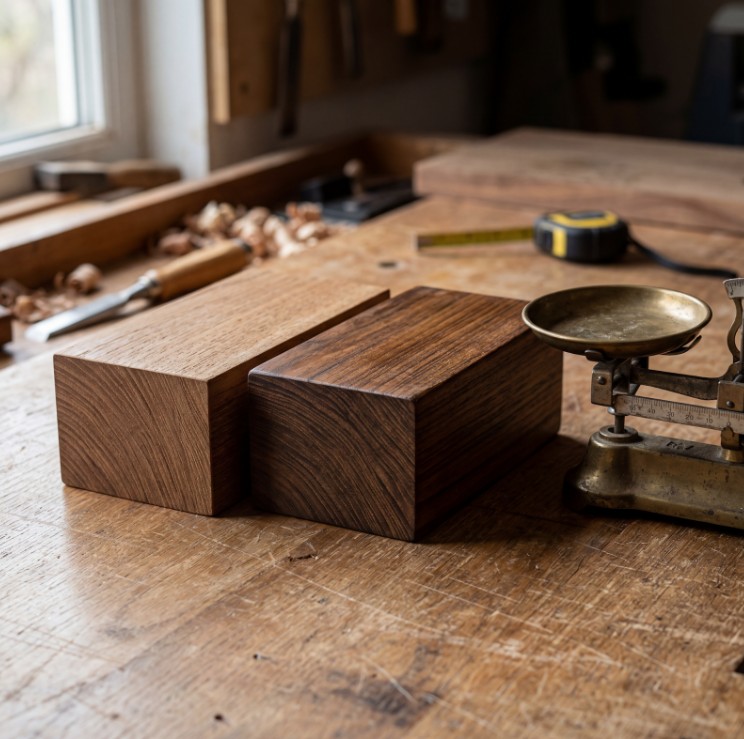
Genuine Burma teak feels substantially heavier than plantation or African teak of identical dimensions because 30-50 years of slow monsoon forest growth creates a denser wood structure.
How to Perform: Request two 12-inch × 12-inch × 1-inch samples — one claimed Burma teak, one plantation teak. Hold one in each hand.
Burma Teak Indicators:
- Noticeably heavier, denser feel
- Solid, compact weight distribution
- Resists finger pressure on edges
Plantation Teak Signs:
- Lighter, less substantial feel
- Somewhat hollow or airy sensation
- Edges yield slightly to firm finger pressure
Typical Weight Difference: Burma teak samples typically weigh 15-25% more than plantation teak of identical size.
Important Limitation: Moisture content affects weight. Freshly cut plantation teak may temporarily weigh more than kiln-dried Burma teak. This test works best comparing similarly processed woods. Don’t rely on this test alone.
Test 2: Grain Pattern Analysis — Nature's Signature
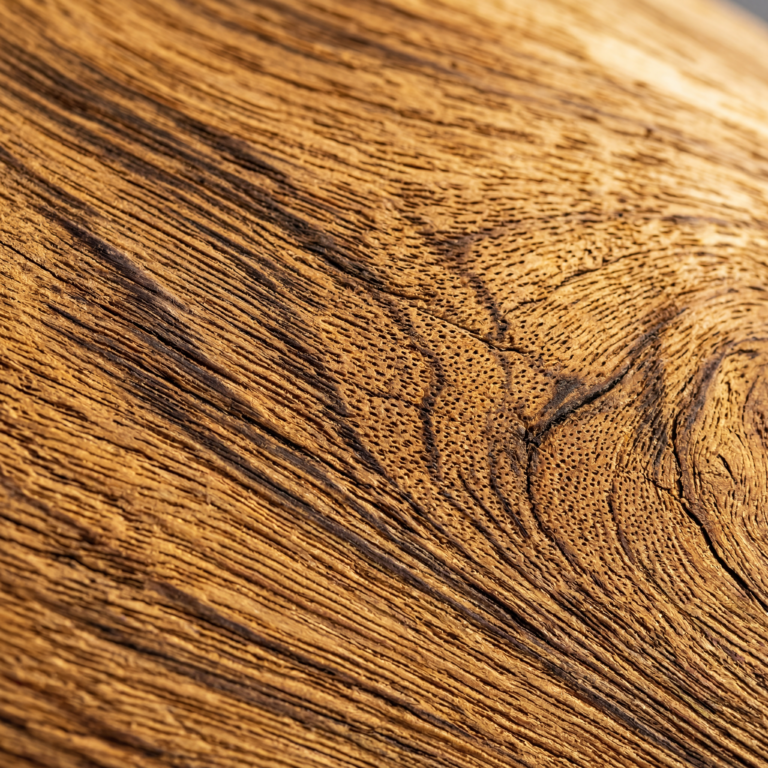
Burma teak develops distinctive grain patterns from irregular growth in competitive forest environments, unlike the uniform patterns of plantation timber.
How to Perform: Examine freshly planed or sanded surfaces in bright natural light. Observe grain line spacing and consistency across 2-3 different sections.
Burma Teak Grain Indicators:
- Fine, tightly-spaced grain lines (slow annual growth)
- Irregular patterns with natural variation between sections
- Strong contrast between dark grain and lighter background
- Occasional interlocking grain creates wave patterns
Plantation Teak Grain Signs:
- Wider-spaced grain lines (rapid growth with optimal resources)
- More uniform, predictable patterns
- Weaker contrast between grain and base colour
- Predominantly straight grain with minimal interlocking
Why This Occurs: Natural forest Burma teak competes with surrounding trees for sunlight, water, and nutrients. Growth rates vary annually based on monsoon intensity. Plantation teak receives consistent spacing, irrigation, and nutrients, producing uniform growth rings.
Critical Limitation: Grain patterns vary within the same tree. Heartwood differs from sapwood. Some plantation sections show fine grain. This test indicates probability, not certainty.
Test 3: The Natural Oil Assessment
High natural oil content is Burma teak’s defining characteristic — you can often feel and see it.
How to Perform: Ask suppliers to plane or sand a small test section. Run your palm across the fresh surface. Wait 15-20 minutes, then check again.
Burma Teak Oil Indicators:
- Slightly waxy or oily surface feel
- Your hand feels subtly slick after touching
- Surface develops natural sheen within 20-30 minutes
- Fresh-cut wood has a distinctive, slightly sweet aroma
Plantation Teak Characteristics:
- Drier, less oily surface
- Minimal residual feel on hands
- Less pronounced natural sheen
- Milder or different aroma
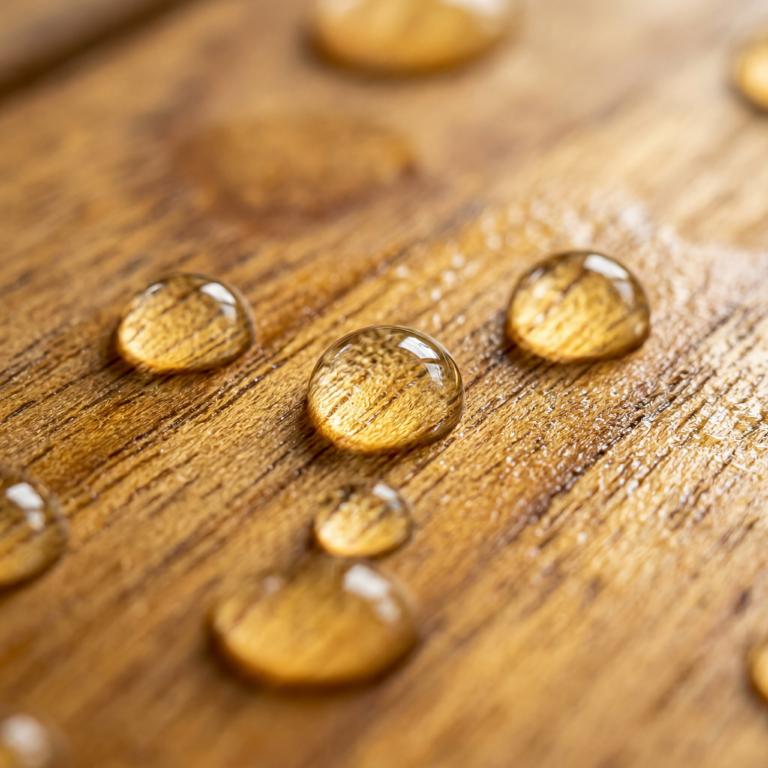
Water Bead Test: Place 3-4 water drops on the surface. On genuine Burma teak, water remains beaded for 45-90 seconds. On plantation teak, water absorbs within 15-30 seconds.
Why Oil Content Matters: Myanmar’s heavy monsoon rainfall (2,000-3,000mm annually) forces Burma teak to develop protective oils preventing water damage. This same oil provides termite resistance and dimensional stability in Bangalore’s variable humidity (60-85% range).
Major Limitation: Some suppliers apply external oils or treatments to plantation/African teak mimicking the Burma teak feel. These treatments wear off within 6-18 months while natural oils persist indefinitely. Always ask if wood has been treated. Better yet, test untreated, unfinished surfaces when possible.
Test 4: Color and Aging Observation
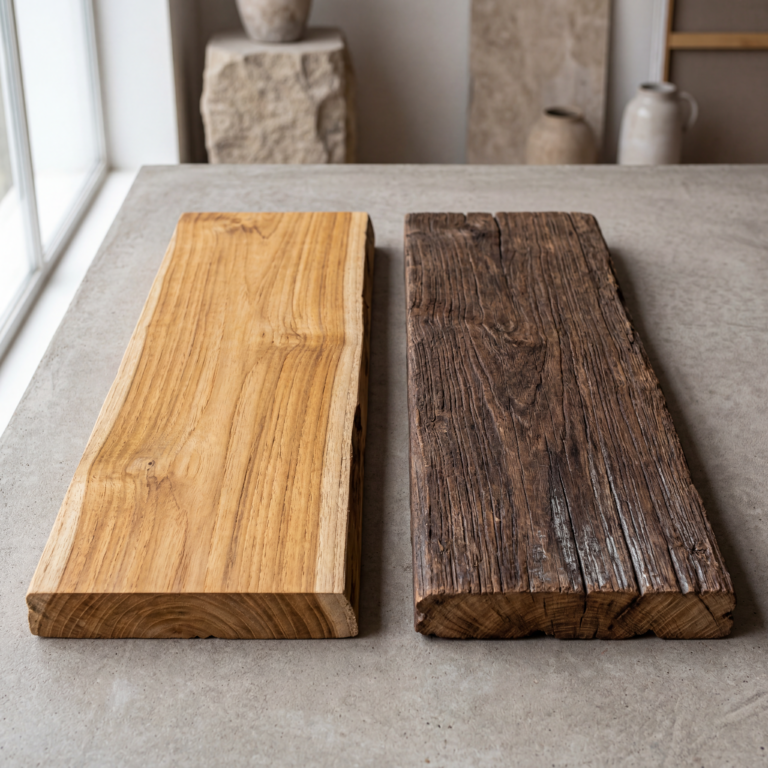
Burma teak exhibits distinctive golden-brown colouring when fresh-cut, deepening to rich chocolate-brown over time. Plantation alternatives tend to be lighter.
How to Perform: Compare fresh-cut surfaces against aged samples (5-10+ years) if the supplier has both. If not, examine colour depth and consistency.
Fresh-Cut Burma Teak:
- Rich golden-brown base colour
- Dark chocolate-brown grain lines
- Warm, deep tone even when new
- Consistent colour across heartwood sections
Fresh-Cut Plantation Teak:
- Lighter, more yellowish base tone
- Less dramatic grain contrast
- Colour lacks depth and richness
- More variation between sections
Ageing Patterns: Request to see aged Burma teak. Over 5-10 years, it should deepen to rich reddish-brown or chocolate tones with natural patina. Plantation teak ages to lighter, greyish-brown tones. TFS World at Mysore Road can show ageing examples in its Tikovina furniture collection.
Why Colour Differs: The natural oils, resins, and extractives that create Burma teak’s colour intensify through oxidation over the years. This characteristic ageing is why Burma teak furniture becomes a valuable heirloom while plantation furniture loses aesthetic value.
Limitation: Surface stains and oil treatments temporarily alter colour. Avoid testing finished, stained, or heavily treated pieces. This test works best on raw, unfinished timber.
What These Tests Actually Tell You
Be realistic about these tests’ limitations. They help you:
- Spot obviously fake "Burma teak" (lightweight, dry surface, wrong colour)
- Identify suppliers worth deeper investigation
- Ask informed questions demonstrating you're knowledgeable
- Understand what characteristics define quality teak
- Replace expert analysis or laboratory testing
- Provide absolute certainty on marginal cases
- Guarantee long-term wood performance
- Substitute for working with established, trusted suppliers
The Real Strategy: Learn enough to have educated conversations with suppliers, then trust established businesses with decades of experience and reputation to protect.
Choosing Suppliers Over Tests
The most reliable path to genuine Burma teak isn’t mastering identification — it’s selecting suppliers with:
Long Operating History: Established businesses with proven track records
Physical Showroom: Established location you can visit (not just phone numbers or online presence)
Product Range: Multiple teak applications (doors, furniture, flooring) suggesting serious inventory investment
Warranty Offerings: Confidence to offer guarantees (TFS World provides 5-year warranties on wooden furniture components)
Customer References: Willingness to provide completed project examples
Professional Response: When you ask technical questions about grain, oil content, or source locations, knowledgeable suppliers provide detailed answers. Evasive responses signal problems.
TFS World at Metro Pillar 497, Mysore Road maintains Burma teak inventory under their Tikovina brand. Visit to compare genuine Burma teak against Border Teak, Mahogany, and other alternatives side-by-side.
Experience Genuine Burma Teak With Expert Guidance
See the difference between Burma teak and alternatives firsthand. TFS World’s Mysore Road showroom displays Tikovina brand Burma teak outdoor furniture alongside other premium hardwoods. Feel the weight, check the oil content, examine grain patterns — all with expert guidance.
TFS World
Metro Pillar no. 497, Near Jnana Bharathi Metro Station, Off Mysore Road, Bangalore - 560039
Frequently Asked Questions
No. These tests provide indicators and signs, not absolute proof. Even timber experts with decades of experience cannot always distinguish premium African or plantation teak from Burma teak without working with trusted suppliers who have verified sources. Use these tests to spot obvious fakes and ask informed questions.
Working with established suppliers who have long-standing relationships with verified Myanmar manufacturers. Look for suppliers with decades of experience, physical showrooms, customer references, and professional reputations like TFS World.
Burma teak grows in Myanmar’s monsoon climate with 2,000-3,000mm annual rainfall. Trees develop natural protective oils (2-3× higher than plantation teak) to survive waterlogging and prevent fungal attack. Plantation teak receives controlled irrigation so it doesn’t develop this intensive oil protection.
Yes. Some suppliers treat plantation or African teak with oils/waxes to mimic Burma teak’s natural feel. These treatments wash out or wear off within 6-18 months while natural oils remain permanent. Always ask if wood has been treated. When possible, test raw, untreated, unfinished surfaces.
Authentic Burma teak costs ₹12,000-₹18,000 per cubic foot. Prices below ₹10,000/cubic foot for “Burma teak” are red flags — you’re likely to see African teak (₹4,500-₹7,000) or plantation teak (₹3,500-₹6,000) being misrepresented. Myanmar’s manufacturing, shipping, and import duties make cheaper pricing impossible for legitimate suppliers.
No. Wood moisture dramatically affects weight. Wet plantation teak may temporarily weigh more than dry Burma teak. The weight test works best comparing similarly processed woods (both kiln-dried or both air-dried to the same moisture levels). Don’t rely on weight alone — use it alongside grain, oil checks, and supplier verification.
TFS World at Metro Pillar 497, Mysore Road displays Tikovina brand Burma teak outdoor furniture. Their experienced team can guide you through the differences between genuine Burma teak and alternatives like Border Teak, Mahogany, and Oak to help you understand quality and price differences firsthand.
Related Post
 Solid Wood Flooring in Bangalore: Types, Cost & Installation Guide
 How to Identify Teak Wood: 7 Easy Ways to Check Real Teak
 African Teak Wood Price in Bangalore (2026): Complete Buying Guide
 Top Wood Door Manufacturers in Karnataka: How to Choose (2026)
 Buy Vascal Doors in Bangalore: Complete 2026 Buying Guide
 Best Wood for Doors and Windows in India: 2026 Comparison Guide
 Best Wood for Home Interiors in Bangalore: Complete Guide (2026)
 Wooden Pooja Room Doors in Bangalore: Designs, Price & Buying Guide
 Teak Wood Furniture Manufacturers in Bangalore: Types & Cost (2026)
 Buy Teak Wood Door Frames in Bangalore: Price & Types (2026)
 Window Shutters Bangalore: Prices, Types & Buying Guide (2026) | TFS World
 Burma Teak Wood Price in Bangalore (2026): Latest Rates & Buying Guide | TFS World
 Teak Wood Price Per CFT in Bangalore (2026): Latest Rates & Buying Guide | TFS World