

HOW TO CHOOSE WOODEN DOORS: BUYER'S GUIDE INDIA 2026
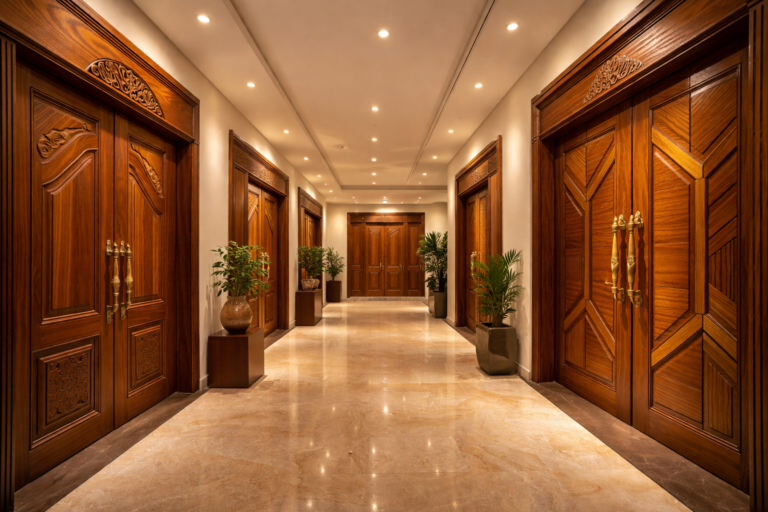
When Priya walked into TFS World’s Bangalore showroom last month, she had one simple goal: find a good wooden door for her new home. Three hours later, she left with complete clarity, a purchase order for Burma Teak entrance doors, and genuine excitement about her choice.
What changed? She learned the five things every homeowner needs to know before buying wooden doors. Here’s exactly what she discovered and what you need to know to make the right choice.
Why Quality Matters More Than You Think
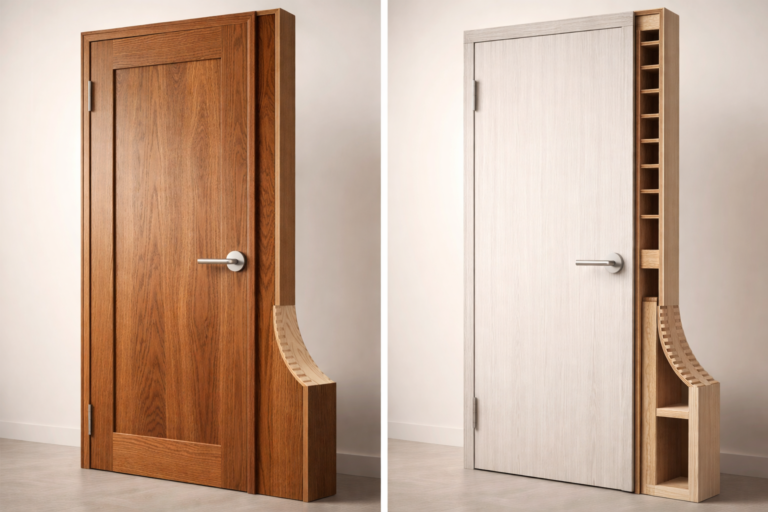
Most people shop for wooden doors based on how they look. But here’s what professionals know: the real difference shows up five years later.
A well-made wooden door should feel substantial the moment you touch it. You shouldn’t be able to lift it easily. When you knock on it, you should hear a deep, resonant sound—not a hollow thud. These simple tests reveal whether you’re looking at solid wood or lightweight filler wrapped in veneer.
At TFS World, the consultant had Priya perform these tests herself. “Feel the weight,” he told her, pointing to different doors. The difference was immediate. Real quality wooden doors have presence.
What Makes a Wooden Door Last Decades
The doors that serve Indian homes for 25-30 years share three characteristics:
Proper wood selection: Not all woods perform equally. Some naturally resist termites. Others handle humidity better. A few, like Burma Teak, do both exceptionally well.
Correct moisture content: Indian climates vary dramatically. Bangalore’s unpredictable weather, Mumbai’s coastal humidity, Delhi’s extreme heat—each demands properly dried wood. Kiln-dried wood with 15-20% moisture content prevents warping across seasons.
Quality craftsmanship: Smooth, even finishes indicate careful work. Natural grain patterns prove authenticity. If the wood looks too perfect, it’s probably printed laminate designed to fool buyers.
Understanding Your Wood Options (And What They Really Mean)
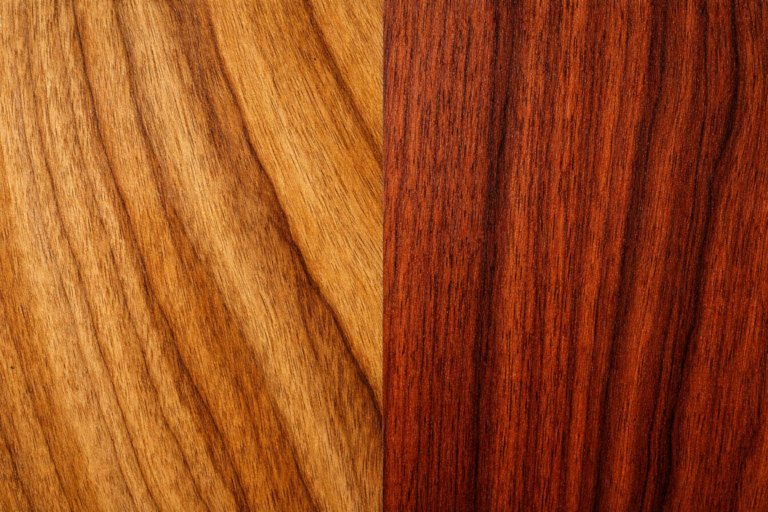
TFS World specializes in woods that actually exist in their inventory—not marketing promises. Here’s what each option delivers:
Burma Teak: The Investment That Outlasts Your Mortgage
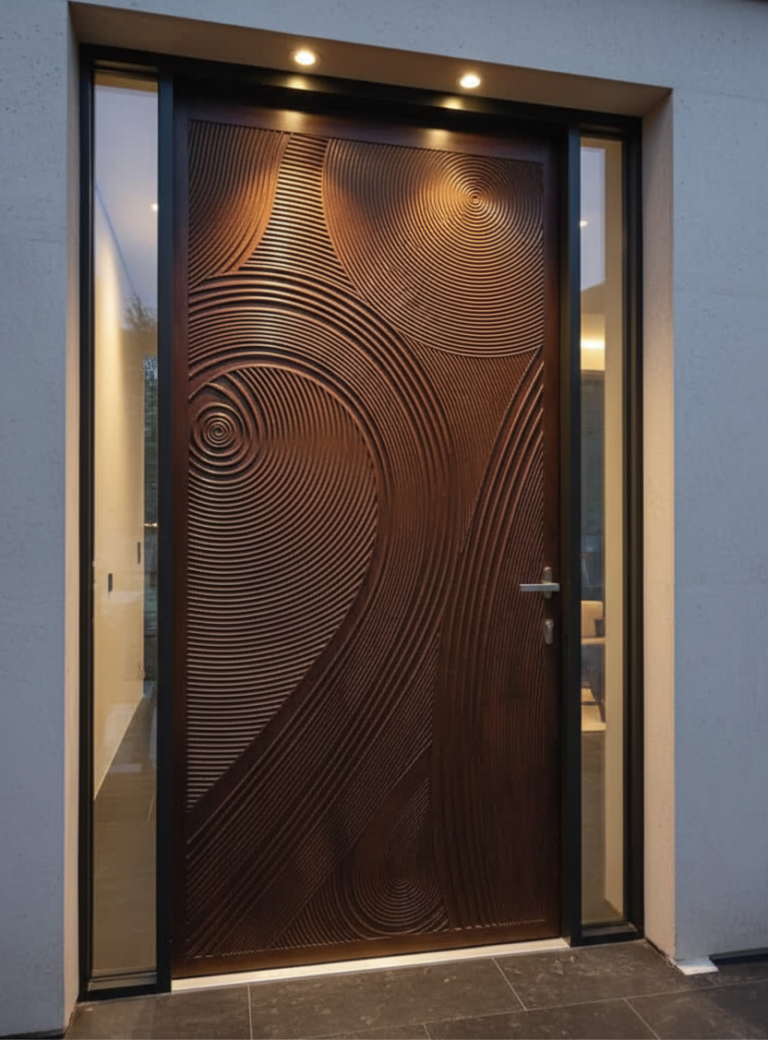
Walk into the premium section of TFS World, and Burma Teak dominates. There’s a reason temples and palaces have used this wood for centuries.
Price range: ₹2,500+ per square foot
Best for: Main entrances, homes in any climate, buyers wanting doors their grandchildren will use
The consultant’s promise to Priya? “Your grandchildren will use this door.” With Burma Teak, that’s not marketing—it’s reality.
Note: For frames pricing – Burma: ₹9,500+/cft, Border Teak: ₹3,800+/cft, Honne: ₹2,850+/cft
Honne: Traditional Indian Hardwood for Practical Budgets
Priya’s budget-conscious eye caught Honne immediately. This traditional Indian hardwood offers something rare: genuine quality at mid-range pricing.
Strong termite resistance from natural properties. Beautiful finish that improves with time. Strength that handles daily use without complaints. Most Bangalore homes use Honne for door frames because it simply works.
Price range: Doors start at ₹1,000+ per square foot
Best for: Interior doors, frame construction, buyers balancing quality and budget
Mahogany, Oak, and Ash: Custom Aesthetics with Proven Performance
These three woods serve a specific purpose: creating the exact look you want.
Rich tones that photograph beautifully. Distinctive grain patterns you can’t replicate. Custom design flexibility for specific interior themes. Mid-range pricing that fits most renovation budgets.
Best for: Design-focused homes, custom interior projects, specific aesthetic requirements
The Climate Question Everyone Asks
“Bangalore’s weather is so unpredictable,” Priya mentioned during her consultation. The response surprised her.
Moisture content matters more than wood type for most climates. Properly dried wood—verified with certificates showing 15-20% moisture—prevents seasonal warping regardless of location.
Coastal vs. Inland: What Actually Makes a Difference
For coastal buyers (Mumbai, Chennai, Goa): Burma Teak’s natural oils resist humidity better than any chemical treatment. This isn’t optional—it’s essential for doors that won’t warp.
For dry regions (Delhi, Rajasthan, Hyderabad): All wood options work well with proper finishing. Focus on design and budget rather than moisture resistance.
For variable climates (Bangalore, Pune): Any quality wood succeeds with kiln-dried specifications and professional installation.
Design Choices That Match How You Actually Live
Priya explored every door type TFS World offered. Each serves a specific purpose:
Door Styles and When to Choose Them
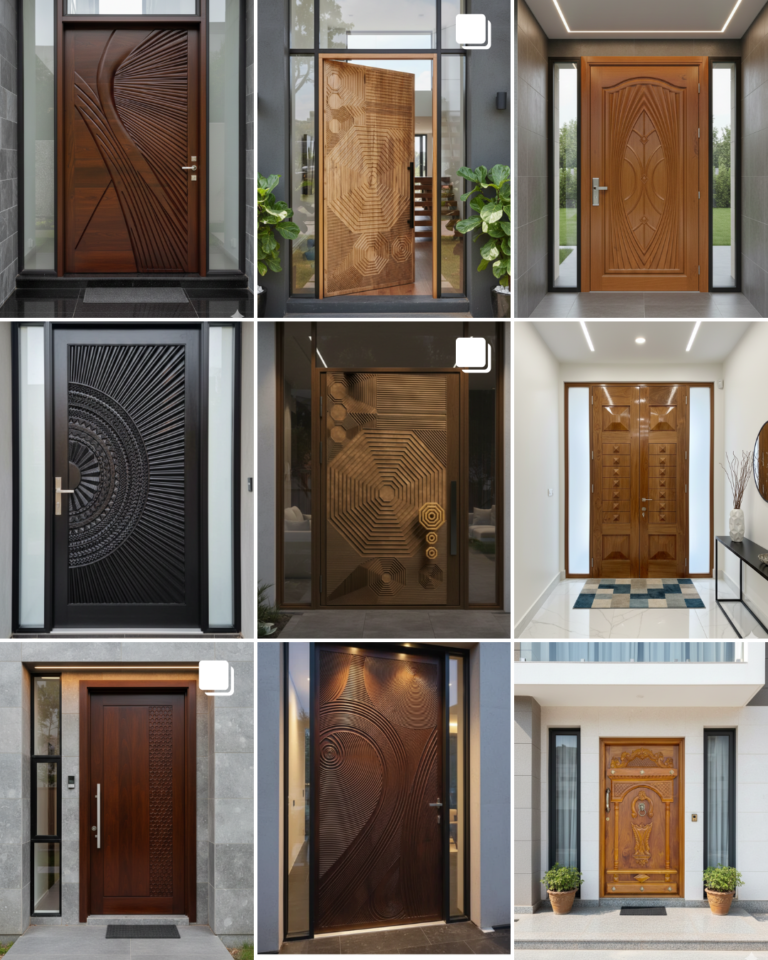
Solid wood doors: The traditional choice. Refinishable multiple times. Built to transfer between generations.
Flush doors: Modern aesthetics. Clean lines. Minimal maintenance. Perfect for contemporary interiors.
Panel doors: Classic elegance. Visual interest. Works with both traditional and modern homes.
Carved options: Artistic statement pieces. Cultural significance. Unique conversation starters.
French doors: Combines wood with glass. Brings natural light indoors. Creates visual connection between spaces.
Priya chose a 6-panel teak design. Traditional enough to age gracefully. Timeless enough to never look dated.
Why Installation Matters as Much as the Door Itself
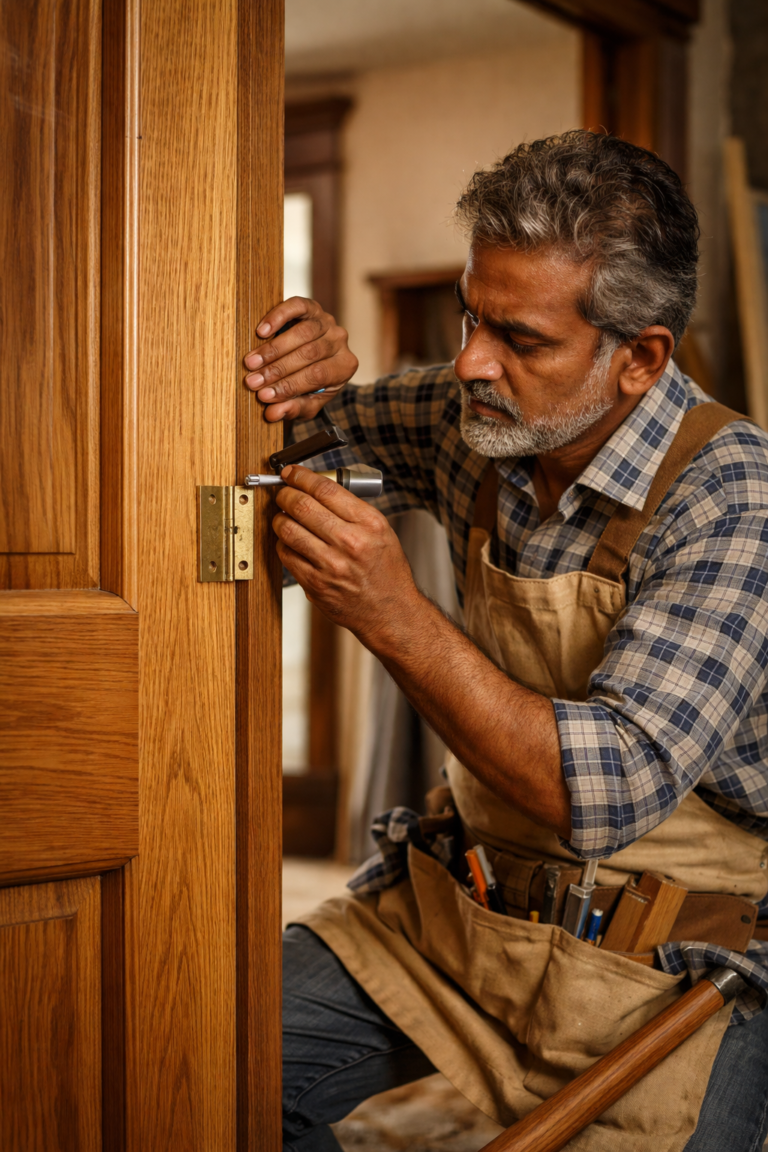
“We don’t just sell wooden doors,” TFS’s consultant emphasized. This wasn’t a sales pitch—it was the difference between success and failure.
Professional installation handles frames, shutters, hardware, and finishing as one integrated system. TFS’s carpenters bring 50 years of combined expertise. After-sales service comes included, not as an expensive add-on.
That reassurance sealed Priya’s decision. She wasn’t just buying wood—she was buying expertise, experience, and accountability.
Your Pre-Purchase Checklist
Before committing to any wooden door purchase:
Perform physical tests: Knock to check solidity. Lift to verify weight. Both reveal quality instantly.
Verify authenticity: Check grain patterns for natural variation. Check moisture content. Confirm wood species by the texture & grains.
Inspect construction: Examine joint quality carefully. Look for smooth, even finishes. Check edge sealing completeness.
Confirm service: Ensure professional installation is included. Ask about warranty coverage. Understand after-sales service availability.
Location: Visit TFS World at Metro Pillar 497, Jnana Bharathi Metro Station, Bangalore. See options in person before deciding.
The Maintenance Reality Nobody Mentions
The consultant’s parting advice stuck with Priya: “Weekly dusting, quarterly polishing, annual hardware checks. Your wooden doors will outlast your mortgage.”
Good wooden doors aren’t high-maintenance—they’re smart maintenance. A few minutes weekly prevents hours of problems yearly.
Frequently Asked Questions
Burma Teak for maximum durability and natural resistance. Honne for excellent value while maintaining quality.
₹1,000+ per square foot depending on wood type and quality grade.
Solid lasts 30+ years and allows multiple refinishing. Engineered suits high humidity environments better.
Quality teak or honne doors: 25-30 years with basic maintenance. Burma Teak often exceeds 30 years.
Burma Teak and Honne resist termites naturally. Other woods require chemical treatment for protection.
Yes, with proper treatment and drying. Burma Teak performs best for coastal areas without additional treatment.
TFS World, Metro Pillar 497, Jnana Bharathi Metro Station. 50+ years timber expertise with complete installation service.
Related Post
 HONNE WOOD PRICE IN BANGALORE
 Ready Made Wooden Door Frames In Bangalore
 How to Identify Genuine Burma Teak: 4 Tests Anyone Can Do Before Buying
 The Journey of Burma Teak: From Myanmar Forests to Your Bangalore Home
 TYPES OF WOODEN FLOORING
 Which Wood is Best for Bed? Best Wooden Bed Frames Guide
 Best Wood for Pooja Room Doors: Complete Guide for Indian Homes
 Wood Flooring Maintenance 101: Seasonal Care Guide for Indian Homes
 5 Common Mistakes People Make When Buying Wooden Doors (And How to Avoid Them)
 Teak Wood Main Door Price in Bangalore: Complete 2025 Price Guide
 Best Wood for Furniture in India: The Complete Comparison Guide
 Teak Wood Price in Bangalore – Latest Rates & Quality Options
 What is the Difference Between Sawnwood and Thermowood?